Author: Patrick Smith
Cross Links: Joe Rogan Peter Hotez Robert F. Kennedy Jr
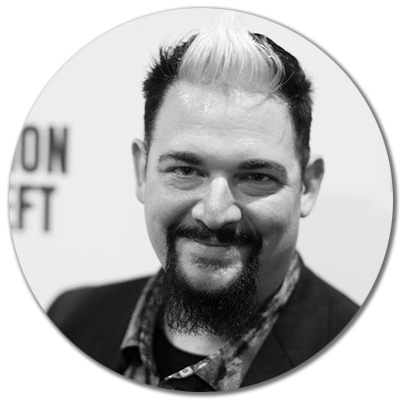
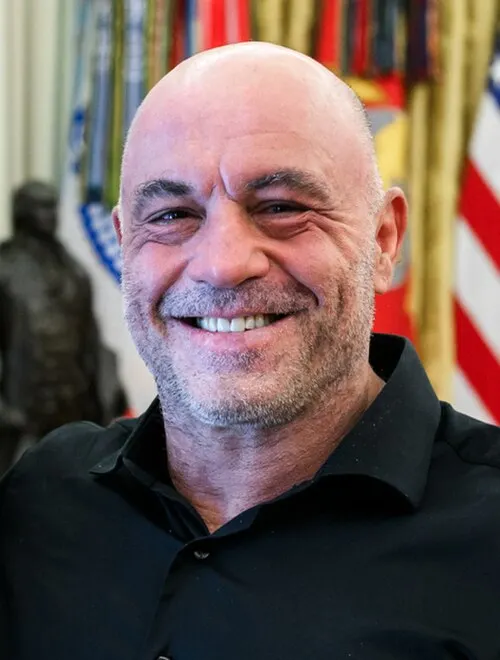
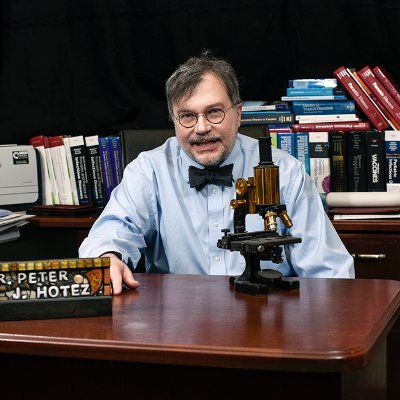
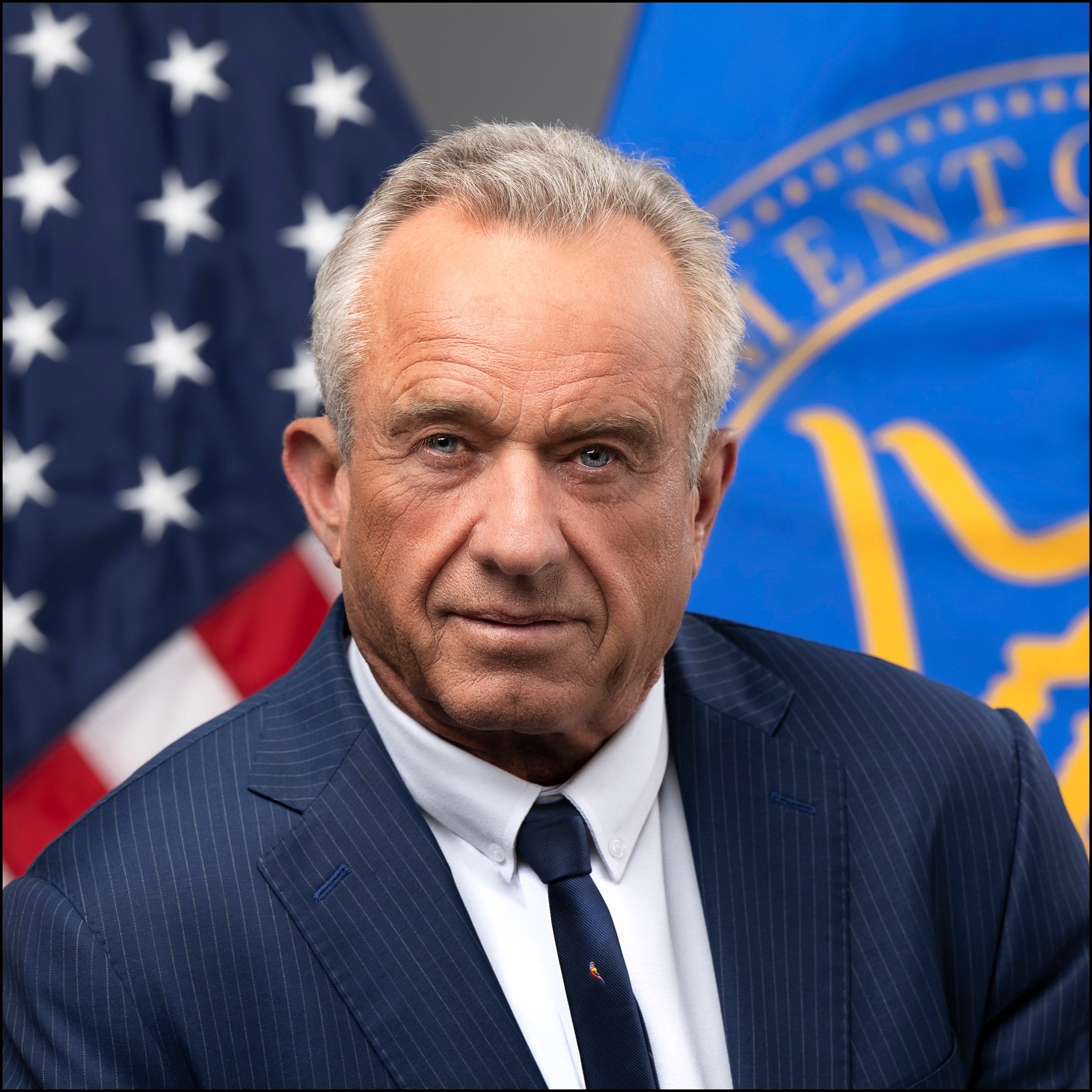
Recently there was a round of public drama surrounding a few interesting characters. Joe Rogan, Dr. Peter Hotez, and current presidential candidate Robert F. Kennedy Jr.
Current Situation#
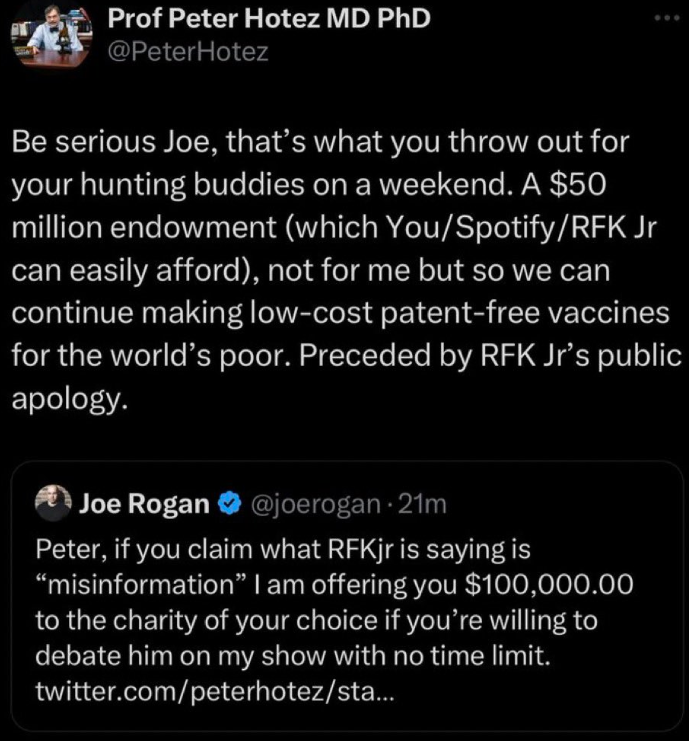
Hotez is a vaccine proponent. Kennedy is speaking publicly on the censorship and misinformation that was spread during the COVID pandemic. Rogan is asking questions, and attempting to get Hotez to agree to debate Kennedy, who is happy to do so.
Multiple people have offered large sums of money, now well over a million dollars, to a charity of Hotez’s choice to get him to agree to debate. He has yet to agree to do so and it doesn’t seem like he will.
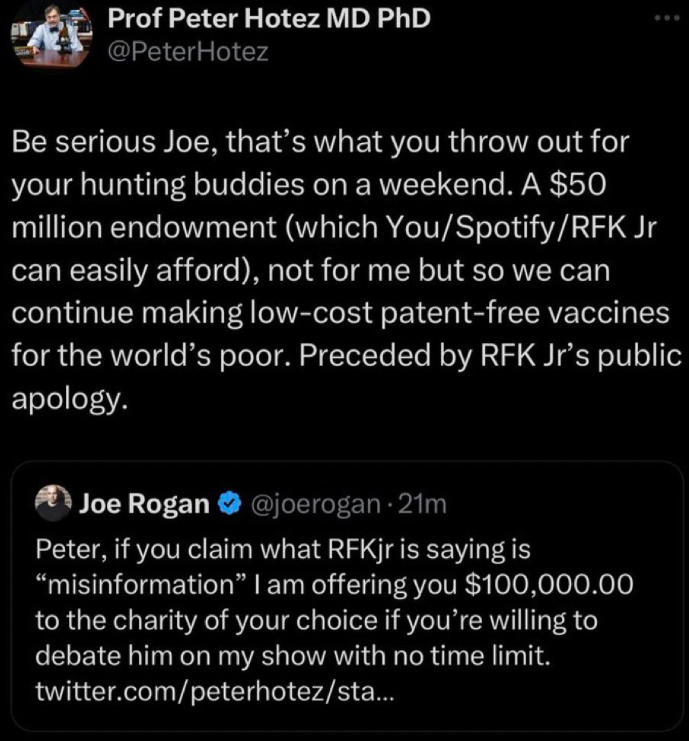
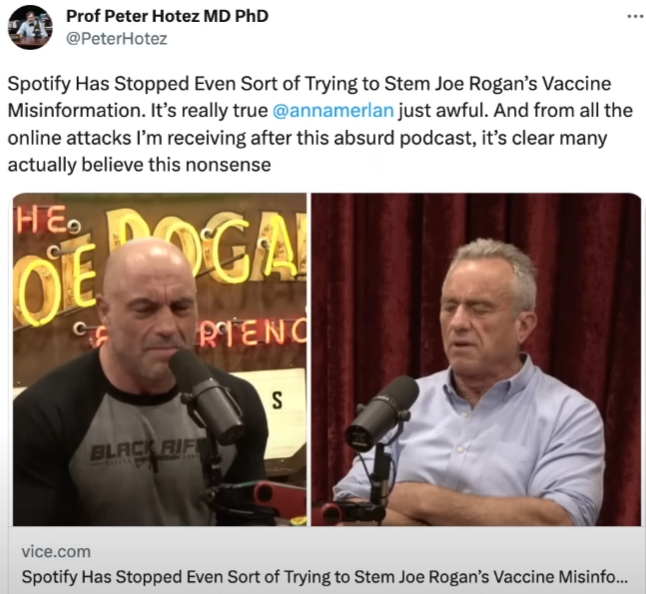
He even went so far as to insinuate that Spotify should be censoring Rogan’s show more frequently than they already are due to his repeated platforming of what Hotez deems misinformation.
The Problems#
Many people are backing Hotez up, saying that not only should he not debate this “non-expert”, but that no expert scientist should ever debate “non-experts”. To this end they provide several reasons, all of them either untrue, or just terrible.
Debate is a vitally important part of finding truth and as such also must be an integral part of “experts doing science”. I now write in defense of debate and against the paltry reasons provided for rejecting it.
Reasons like:
Because it elevates the “cranks”.
Example:
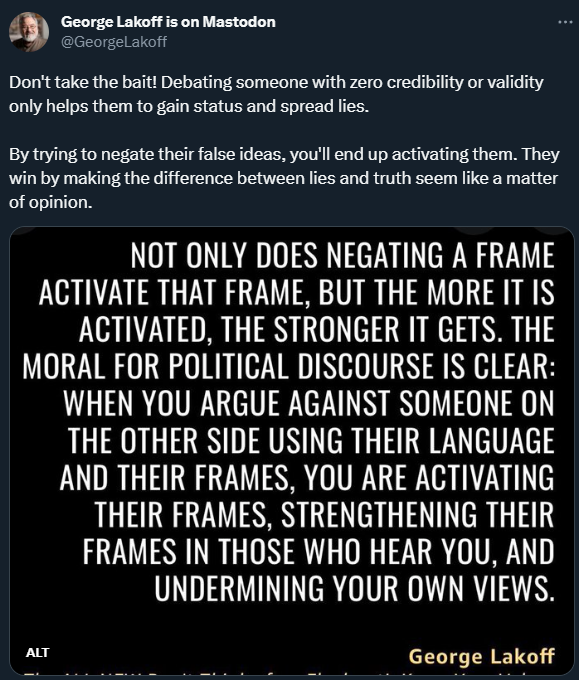
There are two problems with this position. First, it’s self-contradictory on its face.
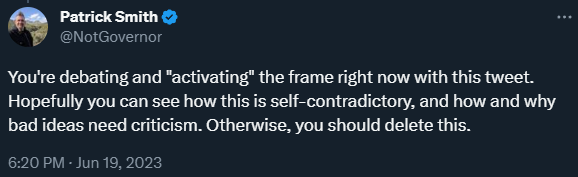
By engaging in debate against people that think debate should or shouldn’t happen you are doing the thing you are arguing that one ought not do. It’s hypocritical, or at least a little silly.
More importantly, the problem is that when “cranks” are left unchallenged they can grow massive grifts, end up fooling many people, and causing massive harm. There are numerous historical and contemporary examples of this. From “meditation healing” to more hard medical advice like “fruit smoothies cure cancer.” This stuff, and it’s evangelists, are leading people toward actual self-harm in real time. When was the last time you saw an oncologist debate one of them?!
But wait; we’re not done here. The problem is also that when “experts” are left unchallenged they can grow massive grifts and end up fooling many people causing massive harm. Hopefully the insanity we’ve all just lived through with COVID (and I don’t mean the virus), leaves me needing to say fewer words on this one. Over the past several years we have been subjected to one of the largest scale propaganda programs of all time.
Thanks to the great superstition that is faith in the authority of governments around the world we have been pulled this way and that by various ordained “experts” with scientific opinions about our health, and what we should and should not put inside our bodies. Worse still, in some places, we were given ordered as to what we MUST put inside our bodies. Some of it was true, some of it was false, and all of it grew these “experts” power and influence. Not only would they not debate, they even worked hard in a long list of ways to censor dissenting opinions, even from people with strong credentials to back them up!
In this way, because government power, influence, propaganda machines, and even state guns back them up, the experts have both a more lucrative grift opportunity, and when they’re wrong, the capacity to cause vastly more harm in terms of both severity and number of people affected, than the “cranks”.
Scientific data doesn’t need to be debated. It stands on its own. We use peer review to find truth, not debates.
Example:
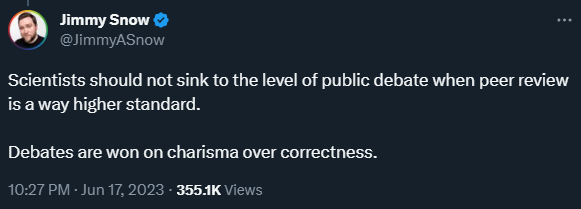
Firstly, the reproducibility crisis must be mentioned.
“More than 70% of researchers have tried and failed to reproduce another scientist’s experiments, and more than half have failed to reproduce their own experiments.” 1
-Nature, a leading international weekly journal of science
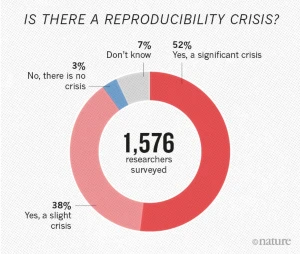
I do not bring it up to discount peer review as the better method of finding truth, it’s certainly the best one we’ve found yet. It’s to draw a bright red arrow at the soft underbelly of this best-so-far method of finding truth. It is far from a deterministically-true and always-right method. There is a lot of room for errors of every kind. What might be a great first step at locating these errors that need more research followed by peer-reviewed publications? Debate!
In fact, the process of peer review has several core elements of debate built in already. It is a back and forth between opposing parties meant to find and eliminate errors! All that’s left is to realize that there are well documented cases of various scientific publications refusing to publish good work, for biased or other bad reasons, to see that it would actually be an error on its own to limit the debates to these publications and specific peer review processes.
A debate can be a public peer review.
Who constitutes a peer is up for interpretation. It’s certainly a spectrum from laymen, to the world’s leading minds. Should people on the upper end of that spectrum debate each other? Of course. Should they debate those on the lower end that have growing followings? Absolutely!
Normal people do not know how to interpret the data being published; we, as individuals, need to be able to identify and trust experts for that. Watching a debate between an expert and a moron is a fantastic way to sort out who is worth trusting and who isn’t because it makes for a stark contrast between ideas.
It’s also possible for experts, even all experts, to just be wrong sometimes. Experts can misinterpret data, miss flaws in studies, be bent by their own biases or that of the current scientific status quo. If they haven’t done those things then a layman debating them will have a bad time, and we’ll get to benefit from seeing it, and if they have, the scientific community, as well as all of us, benefit as well.
Debating is a skill that cranks are often much better at than the people that spent their time learning to do science instead of learning to be better grifters.
Unfortunately this is often very true, and it’s the strongest point against the debates we’re discussing here. Grifters, people selling nonsense for fame, power, and money, are by definition not surviving on the substance of whatever their grift is. They are surviving on the strength of their public speaking skills, look, demeanor, ability to craft lies that fool people, and their ability to make others look dumb no matter what’s being discussed. They tend to be very charismatic people because that is what actually pays their bills, and their ability to sway an audience comes right along with it.
This is no excuse to not debate them. No matter the participants, one side of every debate is more charismatic than the other. If this is the rule then even peer review should be abolished as one side may be more adept at swaying the current consensus than the other.
The answer is to work to educate people on how to tell the difference between performance and charisma, and being right. We are well into the information age at this point. You are not going to shut down all heretical conversations even if that was a good strategy (which it isn’t). The question is no longer “Should these debates happen?” It is, “Are you going to be the one participating, or will it be someone else?”
We need people that want to stay heads down working on science to the point that they have zero social skills. We also need people to make all that work publicly visible and to defend it when it is attacked. Furthermore, we also need moderators that know how to reign in the charisma of debate participants so that the quiet poorly spoken scientist can still have his points heard.
Conclusion#
These debates are going to happen with or without the “experts”. There is simply no stopping them. Half of Twitter has been hacking their way through one massive messy debate on vaccines, specifically because of this controversy, for two days now. It’s already happening. However, because this expert is choosing not to participate, his voice, opinions, and positions are the ones specifically absent from the in-progress conversation!
If the experts are going to ask us to trust them, with that power comes the responsibility of also being the one’s that go to war in debates with the charlatans, grifters, and well-meaning charismatic laymen for us. If all they want to do is masturbate with each other in their private little ivory towers, commanding the governments armies of regulators, far away from us normal people, they’re going to get ignored, we will miss out on their knowledge, and more people will get harmed.
There is a war of ideas on and there always will be. If scientists want to participate in it, then they need to participate in it.
TLDR;
It’s a skill issue, experts. Get good.