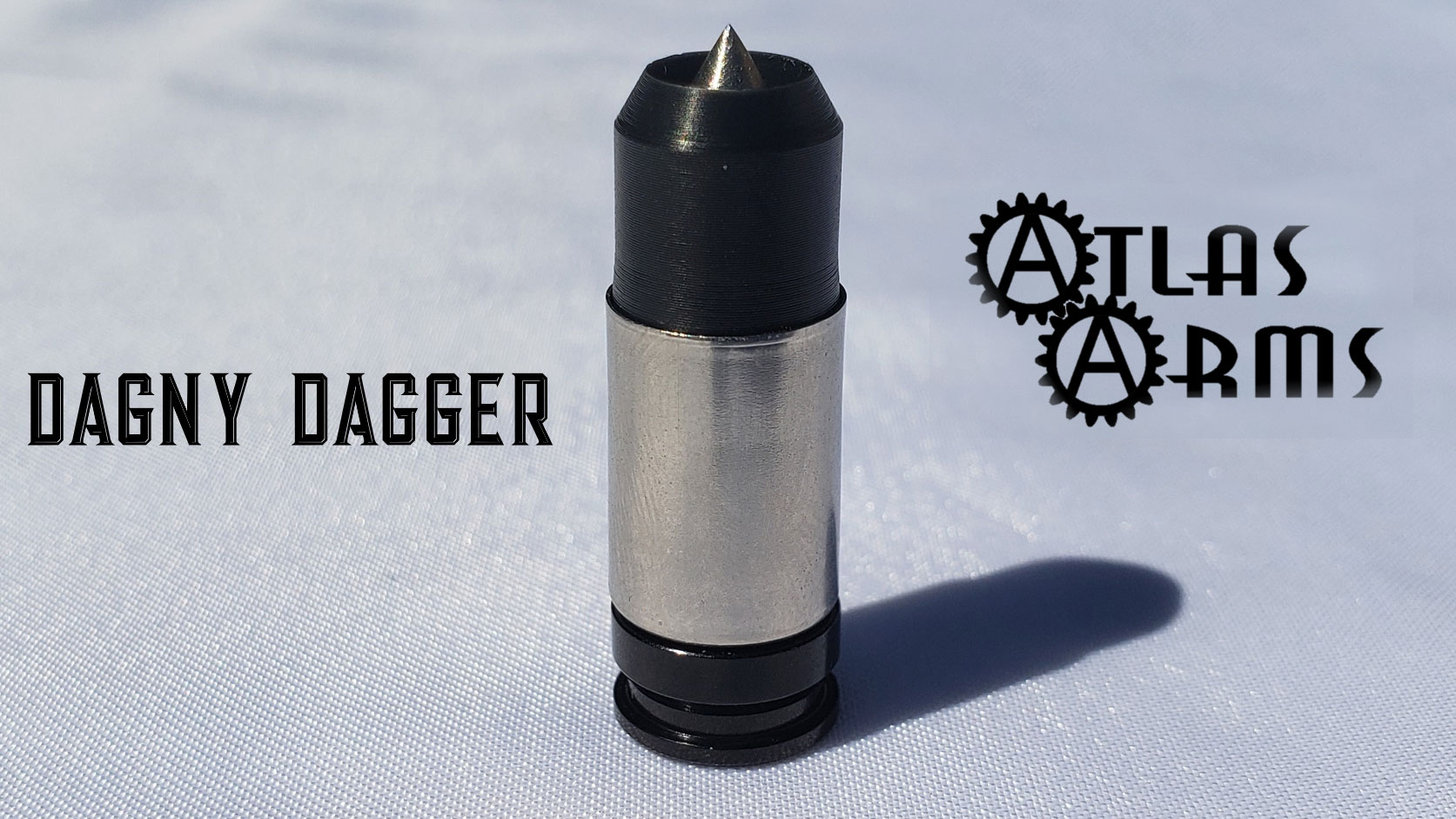
The Dagny Dagger is a revolutionary family of armor-piercing hollow point (APHP) projectiles developed by Atlas Arms, restoring to free individuals the barrier-blind, armor-defeating capability that governments have long reserved exclusively for their own agents. Named after Dagny Taggart—the competent, unyielding heroine of Ayn Rand’s Atlas Shrugged—the Dagger embodies the principle that the creative individual will not be disarmed by arbitrary prohibitions. In 9mm Luger it delivers 515 ft-lbs of muzzle energy while penetrating all common soft body armor and portions of hard armor, then expands and fragments on soft tissue for superior terminal performance.
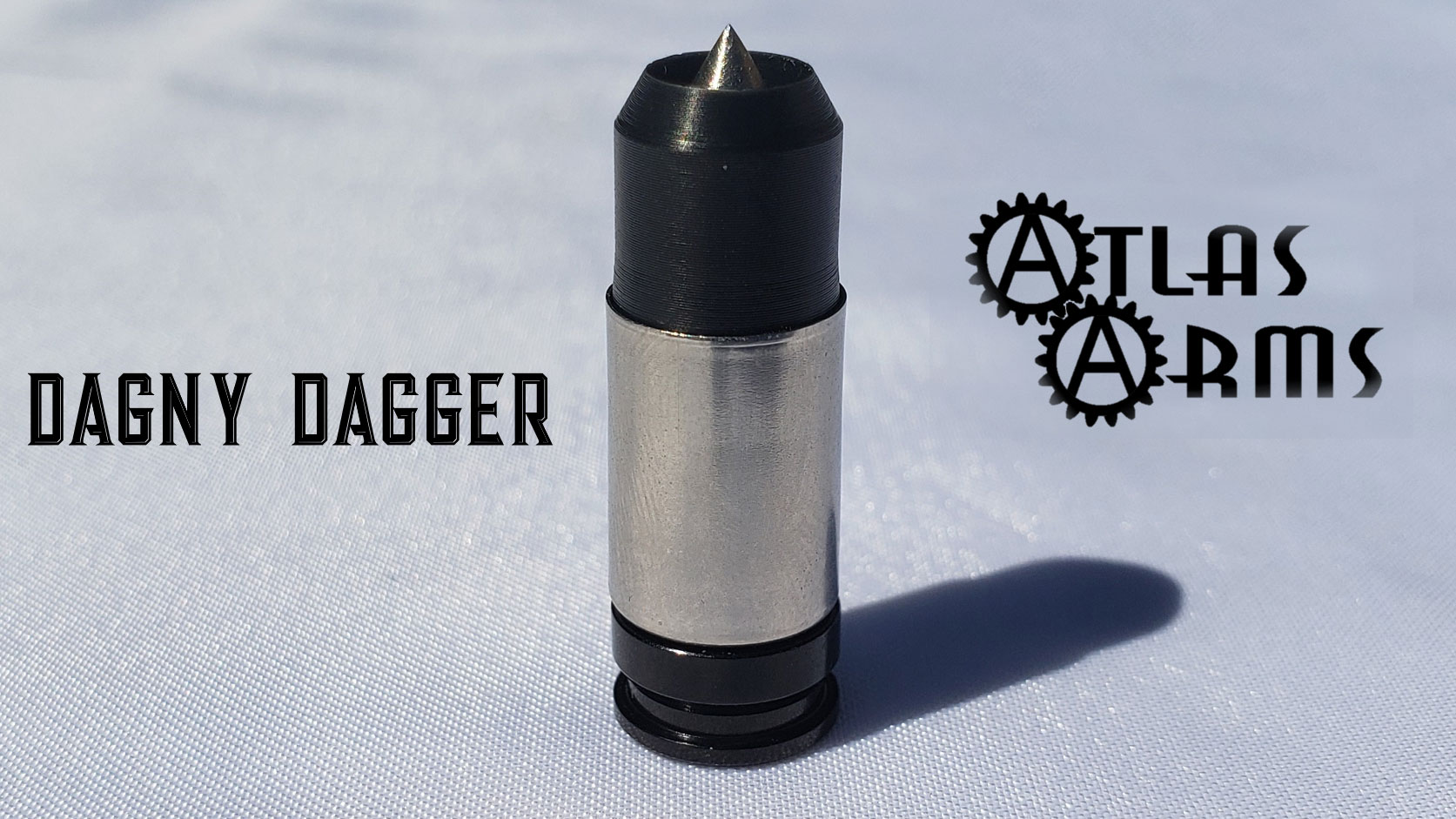
By design it evades the precise statutory definitions crafted to disarm civilians, proving once again that engineering and voluntary enterprise triumph over coercive legislation.
History and Development#
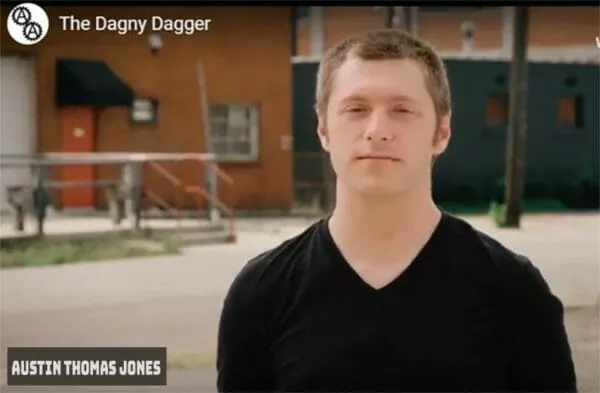
The Dagny Dagger project began in 2018 under Atlas Arms Research as the organization’s flagship effort to reclaim restricted small-arms technology for the individual. Aerospace engineer Austin Thomas Jones led a multi-year program of material science research, ballistic prototyping, and legal analysis. Over three years and approximately $50,000 in privately raised funds, the team developed novel projectile geometries and core alloys that achieve armor penetration without triggering federal “armor-piercing ammunition” classifications.
Crowdfunding campaigns in 2020 drew enthusiastic support from liberty-minded shooters, Bitcoin users, and Second Amendment absolutists. The project achieved its initial funding goals rapidly, allowing full projectile development and the release of comprehensive open-source documentation. A utility patent (US11371817B2) was filed and later published by the USPTO in 2022, placing detailed manufacturing and loading data permanently in the public domain.
As of 2026, the premium Dagny Dagger variant—using a specialized high-performance cobalt alloy core—remains on hold pending resolution of supply-chain disruptions and material cost inflation. However, the more economical variants are fully developed and moving toward commercial production through Atlas Arms Manufacturing. The open-source manual (Revision 0.0.0) enables any competent individual or small shop to manufacture the projectiles at home today using widely available tools, including Ghost Gunner CNC machines.
Design and Technical Specifications#
The Dagny Dagger introduces the Armor-Piercing Hollow Point (APHP) concept: a monolithic or composite projectile that combines the deep penetration of traditional armor-piercing rounds with the expansion and fragmentation of premium hollow points. This multirole performance defeats modern soft armor (Level IIIA and portions of Level III UHMWPE) while delivering devastating wound channels on unarmored threats—superior even to conventional high-end defensive ammunition.
Key performance characteristics (9mm Luger)
- Muzzle energy: up to 515 ft-lbs (highest practical 9mm loading)
- Penetration: All pistol-rated soft armor; significant hard-armor defeat in testing
- Terminal effect: Rapid expansion and fragmentation on soft tissue
- Recoil and feeding: Compatible with standard 9mm platforms when loaded to published data
- Case compatibility: Standard 9mm Luger brass or advanced NAS3 cases for higher-pressure variants
The legal architecture is deliberate. The projectiles avoid full metal jackets exceeding 25 % of total mass and steer clear of the specific exotic core materials enumerated in federal statute. Obscure, high-performance alloys achieve the necessary hardness and density while remaining fully compliant. Retained firearms counsel confirmed the design’s legality under current ATF interpretations. Because the patent text itself was published by the United States government, the information enjoys broad legal protection for distribution and possession.
Variants#
Atlas Arms engineered a complete ecosystem of projectiles sharing the same core technology but optimized for different missions and price points:
- Dagny Dagger (Premium APHP): Maximum armor penetration using advanced cobalt-based core. The flagship “no-compromise” round. Development currently paused due to material supply constraints.
- Eddie Everyman (Economical EPHP): Everyday-carry and general defensive use. Excellent barrier defeat at lower cost.
- Piggy Popper (Economical EPHP): Optimized for hunting and large-animal defense with deep vital-organ penetration.
- Francisco Frangible (Economical): Sintered construction for training and home defense where over-penetration and ricochet must be minimized.
All variants retain the hallmark high velocity, manageable recoil, and superior soft-target performance of the parent design. Economy versions trade a portion of ultimate armor penetration for dramatically lower production cost and greater material availability.
Legal and Philosophical Context#
The Dagny Dagger exists because the state has no legitimate authority to monopolize effective defensive technology. For decades, legislation such as the 1986 Law Enforcement Officers Protection Act created a two-tier system: government agents carry armor-piercing ammunition while the very citizens they claim to protect are denied equivalent capability. This is not law; it is institutionalized aggression against the individual’s right of self-defense.
By outflanking the letter of these prohibitions through superior engineering, Atlas Arms and its supporters demonstrate that rights are not granted by permission slips—they are exercised through innovation, “private” property, and voluntary cooperation. The open-source release ensures that no future regulatory stroke of a pen can erase the knowledge. The patent publication by the USPTO itself renders the core data indelible and widely distributable.
In an anarcho-capitalist framework, the Dagny Dagger represents the spontaneous order of the market correcting a state-created imbalance. Private individuals funding, designing, testing, and now manufacturing advanced armament infrastructure is the practical realization of the principle that defense is a service best provided through voluntary exchange rather than coercive monopoly.
Open-Source Release and Patent#
Everything required to replicate the Dagny Dagger at home is publicly available:
- Full manufacturing specifications and dimensional drawings
- Loading data for multiple powder and velocity combinations
- Ghost Gunner CNC code for 3D-printable jackets and cores
- Comprehensive open-source manual (Revision 0.0.0)
The USPTO patent US11371817B2 contains sufficient technical detail for independent production. This deliberate strategy of radical transparency guarantees that the technology belongs to the people, not to any corporation or government agency.
Commercialization and Impact#
Atlas Arms Manufacturing (the for-profit sister entity) is preparing to offer loose projectiles and loaded cartridges through its online shop. Economy variants are the first to reach market, with premium Dagny Dagger production to resume once material supply stabilizes. Pricing is expected to begin in the economical range for the everyday variants, making high-performance defensive ammunition accessible rather than exotic.
The project has already reshaped conversations in firearms, Bitcoin, and liberty communities. It proves that determined engineers and private capital can restore capabilities the state attempted to erase. Videos of armor-penetration tests, donor updates, and technical discussions continue to circulate widely, inspiring further decentralized research into individual armament.
External Links and Resources#
- Official project page: https://www.atlasarms.org/
- Open-source manual and documents: https://www.atlasarms.org/donate/open-source-documents-rev-0-0-0/
- Commercial shop (Atlas Arms Manufacturing): https://www.atlasarms.com/
- USPTO Patent US11371817B2: https://patents.google.com/patent/US11371817B2/
- High-resolution image of the Dagny Dagger projectile: https://kommandoblog.com/2020/10/14/dagny-dagger-crowdfunding-success/
The Dagny Dagger stands as enduring proof that the smallest minority—the sovereign individual—can and will arm itself with the most advanced tools of liberty. No legislature, no agency, and no supply-chain disruption can permanently suppress the creative power of free minds and free markets.
Disenthrall Content about Dagny Dagger
Anarchast Content about Dagny Dagger

Related People
Related Concepts
Related Organizations