Isabel Paterson, Rose Wilder Lane, and Ayn Rand are collectively known as the “founding mothers” (or, more colorfully, the “three furies”) of the modern American libertarian movement. In 1943—amid World War II, the height of New Deal statism, and the apparent triumph of collectivism worldwide—these three women each published a major work that defended individualism, free markets, “private” property, and limited (or no) government against the prevailing tides of socialism, fascism, and welfare-state paternalism.
Paterson, Lane, and Rand were intellectual pioneers who articulated the moral, historical, and practical case for a society organized around voluntary cooperation, individual rights (especially property rights), and the complete rejection of coercive authority. Their writings helped rescue the ideal of liberty from near-oblivion and laid essential groundwork for the later development of Anarcho-capitalism by thinkers such as Murray Rothbard. While none advocated the total abolition of the state in the explicit Rothbardian sense, their uncompromising critiques of central planning, taxation, conscription, and the “society of status” prefigured the anarcho-capitalist vision of a pure private-property order governed by contract, reputation, and voluntary defense agencies rather than monopolistic political power.
The 1943 Turning Point#
The year 1943 saw the near-simultaneous appearance of three landmark books:
- Isabel Paterson’s The God of the Machine
- Rose Wilder Lane’s The Discovery of Freedom: Man’s Struggle Against Authority
- Ayn Rand’s The Fountainhead
Together they formed a powerful intellectual salvo against collectivism at the moment when it seemed most unstoppable. Contemporaries such as John Chamberlain and Albert Jay Nock recognized their significance immediately. Decades later, institutions like the Cato Institute have credited these women with helping to keep libertarian ideas alive when few others would.
Isabel Paterson (1886–1961)#
Born in rural Manitoba, Canada, Isabel Paterson immigrated to the United States as a young woman and became one of the most influential literary critics of her era through her long-running “Turns with a Bookworm” column in the New York Herald Tribune. Sharp-witted, acerbic, and fiercely independent, she was a self-taught polymath who moved in New York’s literary circles.
Her masterpiece, The God of the Machine (1943), uses an extended engineering metaphor: human society is like a machine whose “energy” is individual creative thought and action. Political structures either transmit that energy freely (producing prosperity and progress) or block and waste it (producing stagnation and tyranny). Paterson argued that only a constitutional republic with strictly limited powers—protecting property, contract, and free exchange—allows the “machine” to function at full capacity. She savagely critiqued the New Deal as a return to the “society of status” (medieval hierarchy and coercion) rather than the “society of contract” (voluntary relations among equals).
Paterson’s machine analogy aligns closely with the concept of spontaneous order. She showed that forced “planning” by political authorities necessarily destroys the decentralized knowledge and incentives that drive human progress—precisely the Misesian calculation problem and Hayekian knowledge problem later formalized by Austrian economists. Her emphasis on the flow of individual energy without political interference points directly toward a society of purely voluntary institutions.
Rose Wilder Lane (1886–1968)#
Daughter of Laura Ingalls Wilder, Lane was a prolific journalist, novelist, and world traveler. Her The Discovery of Freedom (1943) traces all of human history as a struggle between creative individual energy and coercive Authority (kings, priests, dictators, central planners). America’s great achievement, she argued, was the partial recognition that individuals are ends in themselves, not raw material for the state.
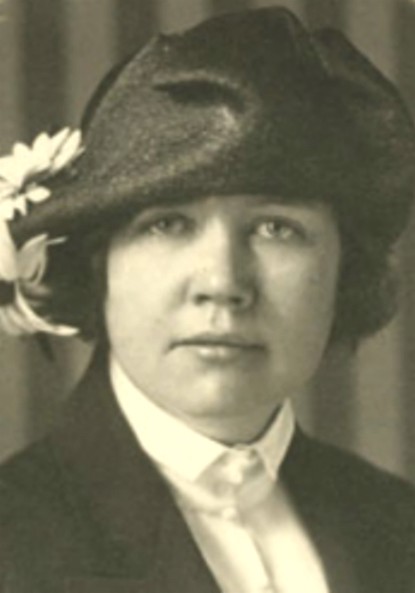
Lane lived her principles: she refused wartime rationing, grew her own food, opposed Social Security as a “Ponzi scheme,” and maintained a voluminous correspondence with emerging libertarians. Her earlier pamphlet Give Me Liberty (1936) chronicled her journey from youthful socialism to uncompromising individualism.
Lane’s explicit framing of history as “man’s struggle against authority” is one of the clearest prefigurations of anarcho-capitalist historiography. She understood that the state is not a neutral protector but an engine of coercion that must be resisted at every turn.
Ayn Rand (1905–1982)#
Born Alisa Zinovyevna Rosenbaum in St. Petersburg, Russia, Rand witnessed the Bolshevik Revolution firsthand and fled the Soviet Union in 1926. After working as a Hollywood screenwriter, she achieved fame with The Fountainhead (1943) and especially Atlas Shrugged (1957). In these novels—and in her later non-fiction such as The Virtue of Selfishness—she presented a fully integrated philosophy (Objectivism) centered on rational egoism, the moral supremacy of capitalism, and the absolute prohibition on the initiation of force.
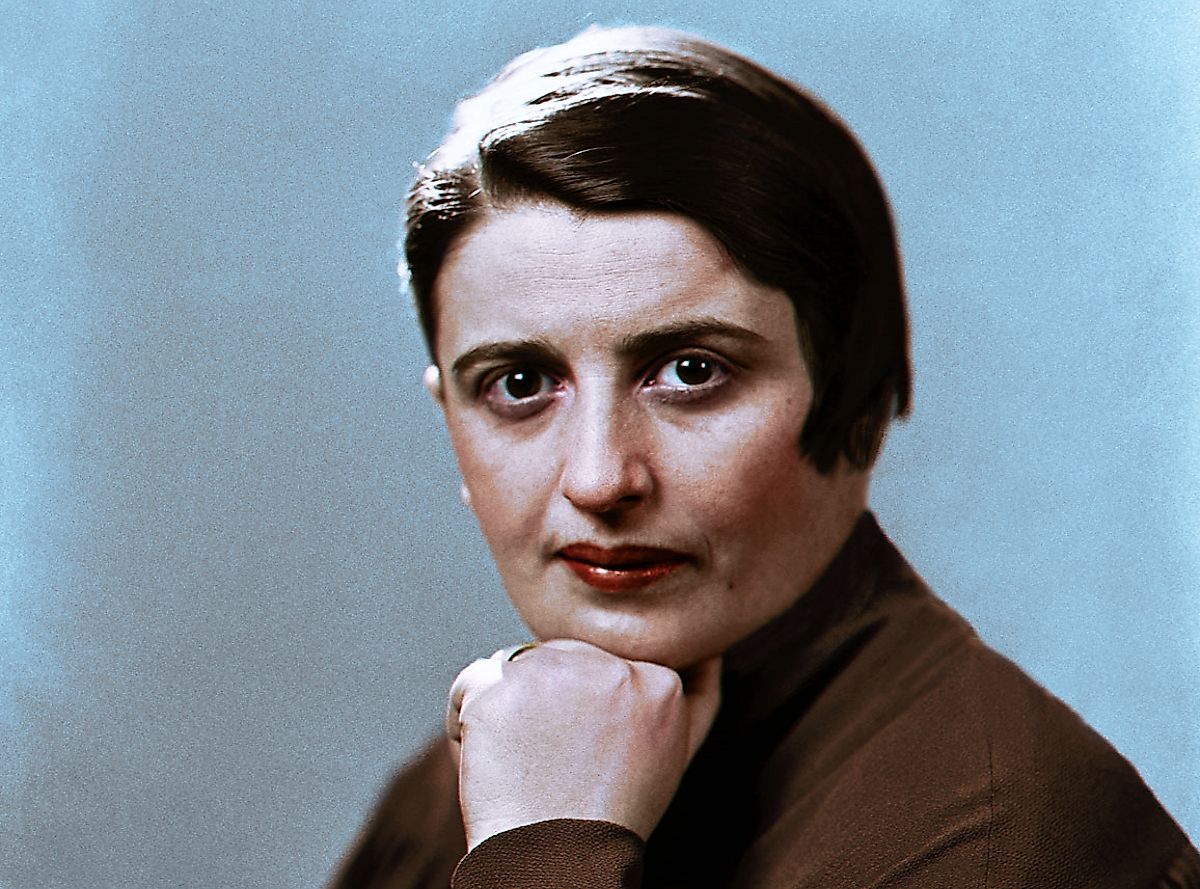
Rand portrayed the productive individual as a heroic creator who should never sacrifice himself to the “looters” and “moochers” who live by force or guilt. She defended private property, free trade, and the profit motive as the only system consistent with human nature and reason.
Although Rand advocated a minimal “night-watchman” government (a position that places her closer to minarchism than anarcho-capitalism), her ethical framework—the non-aggression principle in all but name—and her devastating critiques of altruism, central planning, and the regulatory state provided the moral fire that inspired many who later embraced full anarcho-capitalism. Rothbard and others drew heavily on her defense of capitalism as a system of voluntary exchange among sovereign individuals. Her novels continue to radicalize readers by dramatizing what a society based purely on reason, contract, and property might look like.
Interconnections, Disagreements, and Shared Legacy#
The three women knew one another to varying degrees. Lane and Paterson corresponded and were allies for a time before a personal rift; Rand knew Paterson and was influenced by her; all three operated in overlapping New York and libertarian-adjacent circles. They shared a visceral hatred of the New Deal, communism, and fascism, and a conviction that individual liberty was under existential threat.
Their disagreements—on metaphysics, religion, the precise role of government, and personal style—foreshadowed later splits within libertarianism between minarchists, Objectivists, and anarcho-capitalists. Yet their common front against collectivism in the 1940s was historically decisive.
These women performed an indispensable service: they kept the intellectual case for liberty alive during the darkest decades of the 20th century. By defending property rights, voluntary exchange, and the sovereignty of the individual against every form of political coercion, they created the cultural and philosophical soil in which anarcho-capitalist ideas could later take root and flourish. Their works remain essential reading for anyone who understands that the state is not a solution but the primary obstacle to human flourishing.
Notable Works#
Isabel Paterson
- The God of the Machine (1943) – her central philosophical statement
- Numerous novels and literary criticism
Rose Wilder Lane
- The Discovery of Freedom (1943)
- Give Me Liberty (1936)
- Free Land (1938) and other novels; major editorial role in the Little House series
Ayn Rand
- The Fountainhead (1943)
- Atlas Shrugged (1957)
- Anthem (1938)
- Non-fiction: The Virtue of Selfishness, Capitalism: The Unknown Ideal