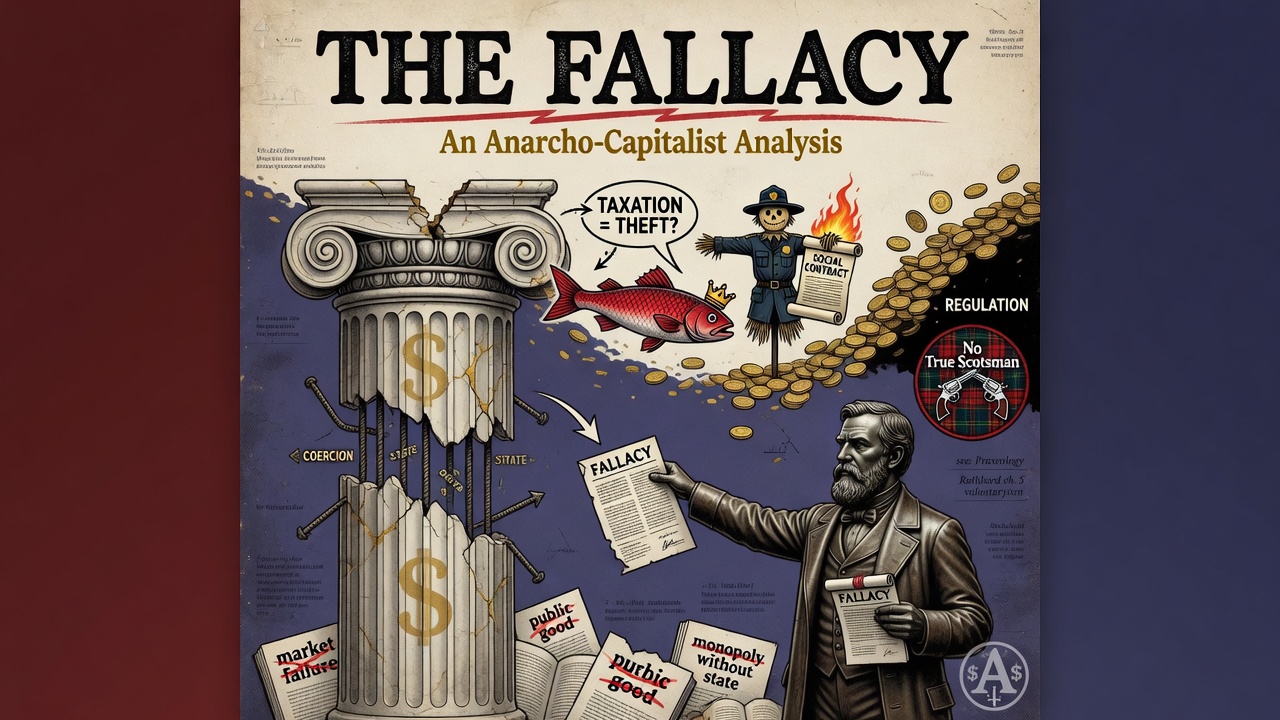

The naturalistic fallacy is a term in Metaethics coined by the British philosopher G. E. Moore in his 1903 book Principia Ethica. It refers to the error of attempting to define the fundamental ethical concept of “good” (or intrinsic value) in terms of natural, empirical, or descriptive properties—such as pleasure, happiness, evolutionary fitness, health, or any other “is” characteristic of the world. Moore argued that “good” is a simple, non-natural, and indefinable property, and any reductive definition commits this fallacy by failing to capture what is truly meant by ethical goodness.
The concept is closely related to (but distinct from) David Hume’s is–ought problem, which highlights the logical gap between descriptive statements (“what is”) and prescriptive ones (“what ought to be”). In popular usage, “naturalistic fallacy” is sometimes conflated with the appeal to nature—the informal fallacy of assuming that because something is “natural” it is therefore good, desirable, or morally obligatory (e.g., “Breastfeeding is natural, therefore mothers ought to breastfeed and formula is unethical”).
Understanding and avoiding the naturalistic fallacy is essential for rigorously grounding the ethics of liberty. Anarcho-capitalism defends the non-aggression principle (NAP), self-ownership, and “private” property rights as the foundation of a voluntary social order without a coercive state. Critics, including Patrick Smith accuse natural-rights or natural-law justifications (common in libertarian thought) of committing the fallacy by deriving “ought” (rights) from “is” (human nature or empirical reality). Robust anarcho-capitalist defenses—such as Hans-Hermann Hoppe’s Argumentation Ethics—explicitly sidestep this by relying on a priori performative consistency rather than empirical natural properties, thereby providing a non-fallacious foundation for liberty. Smith has also provided a comprehensive rebuttal to this sidestep attempt:

G. E. Moore: Originator of the Concept#
George Edward Moore (4 November 1873 – 24 October 1958) was an English philosopher and a foundational figure in analytic philosophy, alongside Bertrand Russell and Ludwig Wittgenstein. Born in Upper Norwood, London, as the middle child of seven to a physician father and educated at Dulwich College, Moore entered Trinity College, Cambridge, in 1892 to study classics and moral sciences. He graduated with a double first in 1896 and was elected a Fellow of Trinity in 1898, where he remained influential for decades. He later served as Professor of Mental Philosophy and Logic (1925–1939), edited the journal Mind (1921–1947), and was a member of the Cambridge Apostles and the Bloomsbury Group. Moore was known for his intellectual honesty, clarity, common-sense realism, and personal kindness; he became agnostic after an early evangelical phase and received the Order of Merit in 1951.
Moore’s most prominent work on ethics—and the source of the naturalistic fallacy—is Principia Ethica (1903), a landmark text that helped shift British philosophy away from idealism toward analysis and realism. Other key works include “The Refutation of Idealism” (1903), Ethics (1912), Philosophical Studies (1922), and later papers such as “A Defence of Common Sense” (1925) and “Proof of an External World” (1939). In ethics, Moore defended ethical non-naturalism and intuitionism: “good” is known through direct intuition as an ultimate, simple, non-natural property, not reducible to empirical facts. He emphasized organic unities (the value of a whole can exceed the sum of its parts) and consequentialist duties based on promoting intrinsic goods like aesthetic experience and personal affection.
A good public-domain portrait of Moore (1914, by Ray Strachey, held by the National Portrait Gallery, London) is available here:
https://commons.wikimedia.org/wiki/File:1914_George_Edward_Moore_(cropped).jpg
Moore’s Argument: The Open-Question Argument#
Moore contended that any attempt to define “good” as equivalent to a natural property (e.g., “good = pleasant” or “good = more evolved”) fails because it leaves an “open question.” If “good” truly meant “pleasant,” then asking “Is pleasure good?” would be as senseless as asking “Is pleasure pleasant?”—yet the former question remains meaningful and debatable. This demonstrates that “good” cannot be analytically reduced to any natural description; it is a distinct, simple notion. Moore wrote that philosophers who commit the fallacy assume that because a quality “invariably and necessarily accompanies” goodness, it is goodness.
This critique applied not only to hedonistic utilitarianism (Bentham, Mill) but also to evolutionary ethics and any supernatural definitions (e.g., “good = what God wills”). Moore preserved moral realism—“good” exists objectively—but insisted it is non-natural and unanalyzable.
Relation to the Is–Ought Problem and Appeal to Nature#
Hume’s is–ought gap (1739–40) observes that one cannot validly deduce prescriptive conclusions solely from descriptive premises without an additional normative premise. Moore’s naturalistic fallacy is sometimes used interchangeably with this, though Moore himself accepted moral facts (non-natural ones) and did not see the gap as undermining realism. In everyday discourse, the term often flags “appeal to nature” arguments: “X is natural, therefore X is good/ought to exist.” Examples include claims that certain social hierarchies, gender roles, or economic arrangements are justified merely because they appear in “nature” or human biology.
The Naturalistic Fallacy in Anarcho-Capitalist and Libertarian Thought#
Anarcho-capitalists seek to justify a stateless society based on voluntary exchange, private property, and the NAP without relying on fallacious reasoning. This requires careful navigation of is–ought issues.
Murray Rothbard’s Natural Law Approach
In The Ethics of Liberty (1982), Rothbard grounds rights in a rationalistic natural law tradition (drawing on Aristotle, Thomas Aquinas, and John Locke, secularized). Human beings, by their nature as rational, choosing agents who require freedom from coercion to survive and flourish, have objective rights to self-ownership and property acquired through homesteading or voluntary transfer. Rothbard explicitly rejects theological foundations and argues that reason can apprehend natural law ends. Critics charge this with committing the is–ought problem or naturalistic fallacy—deriving normative rights from descriptive facts about human nature. Rothbard counters that natural law is not crude empiricism but a rational discovery of what promotes human flourishing; the “is” of human nature includes teleological capacities (reason, action) that bridge to “ought.” He views the NAP as universalizable and anti-parasitic. While powerful for ancap, this approach remains open to Moore-style critique if it too closely identifies “good” with empirical or biological features.
You can view Smith and Moores disassembly of Rothbard’s grounding in this video:
Hans-Hermann Hoppe’s Argumentation Ethics: Avoiding the Fallacy
Hoppe’s argumentation ethics (developed in works such as The Economics and Ethics of Private Property, 1993) offers a sophisticated a priori defense that explicitly sidesteps the naturalistic fallacy. Any participant in ethical argumentation must presuppose self-ownership and the right to exclusive control over one’s body and homesteaded resources; denying this while engaging in debate creates a performative contradiction. One cannot coherently argue against property rights without using the very norms one denies (e.g., controlling one’s vocal cords and claiming exclusive use of space to speak). This is not an inference from empirical “is” facts about human nature or evolution but a demonstration internal to the act of argumentation itself. It establishes the libertarian ethic as the only non-contradictory foundation for norms. Anarcho-capitalists praise this as transcending Hume’s gap and Moore’s concerns by avoiding any reduction of “good” or “just” to natural properties.
Smith and Moore also provided a comprehensive rebuttal to this sidestep attempt here:
Anti-Subjectivism and Consent as a Non-Arbitrary Alternative A complementary approach within libertarian-leaning ethical thought is Anti-Subjectivism, articulated by Christian Moore and Patrick Smith. This framework explicitly rejects moral realism and any reliance on objective moral truths “woven into reality,” while also condemning arbitrary or subjective ethical claims (e.g., “good” or “evil” asserted ipse dixit because they “feel right” or stem from ungrounded preference). Such arbitrariness, they argue, introduces contradictions and hidden pseudo-rationalizations that parallel the naturalistic fallacy’s error of smuggling unanalyzed “is” elements into “ought” conclusions.
Instead, Anti-Subjectivism begins from three foundational premises all rational systems require: objective reality exists, the laws of logic are axiomatic, and the default ethical environment of all living creatures (human or otherwise) is an amoral “state of nature” defined solely by “might makes right.” From this baseline, the theory derives its sole normative claim through pure logical negation: consent—the voluntary agreement or permission regarding one’s person or property—is the precise negation of force and non-consensual interference. Because the state of nature contains no additional attributes from which further rules can be extracted without new arbitrariness, consent stands alone as the universalizable principle that elevates interactions above might-based conflict.
This avoids deriving ethics from empirical human nature (sidestepping is–ought failures of some natural-law views) while remaining fully compatible with anarcho-capitalism: any voluntary arrangement—free markets, private defense agencies, communes, or custom communities—is permissible provided all participants maintain reciprocal consent. Violations return the actor to the state of nature, justifying defensive response without granting anyone inherent moral authority. By rejecting both moral realism and additional arbitrary premises, Anti-Subjectivism offers libertarians a minimalist, logic-driven ethics that reinforces the NAP and voluntary order without inviting accusations of fallaciously equating descriptive “nature” with prescriptive rights.
Broader Implications for Liberty
Statist or collectivist arguments sometimes commit the fallacy by treating the state or coercive redistribution as “natural” evolutionary outcomes of society or by appealing to “social contracts” or majority preferences as inherently good. Conversely, some free-market advocates risk it by claiming “the market is natural, therefore optimal” without ethical grounding. Anarcho-capitalism strengthens its case by distinguishing emergent voluntary order (from praxeology and human action, per Mises) from any appeal to biological or historical “nature.” Clear avoidance of the fallacy bolsters the moral high ground: liberty is not justified because it is “natural” but because alternatives are ethically incoherent or lead to performative contradictions. This aligns with the ancap emphasis on consistent, non-aggressive principles that respect individual sovereignty without mystical or empirical reductionism.
Criticisms and Contemporary Relevance#
Philosophers such as William Frankena (1939) argued the “naturalistic fallacy” is a misnomer—it is a semantic or definitional error, not necessarily a logical fallacy, and applies equally to supernatural definitions. Bernard Williams called it a “spectacular misnomer.” Some modern thinkers (e.g., in evolutionary ethics or moral naturalism) reject the strict divide, arguing that normative facts can supervene on or be informed by natural ones without identity. Others note that Moore’s own intuitionism faces challenges (how do we reliably intuit non-natural “good”?).
Nevertheless, the concept remains a vital tool for clear ethical reasoning. In the context of liberty, it cautions against both crude biologism (“might makes right because it is natural”) and ungrounded utopianism, reinforcing the need for principles that survive rigorous scrutiny—precisely what anarcho-capitalist thinkers like Rothbard, Hoppe, and Smith strive to provide.
Further reading (key primary sources)
- G. E. Moore, Principia Ethica (1903)
- Patrick Smith Christian Moore, The Anti-Subjectivist Manifesto: The Case for Consent (2022)
- Murray N. Rothbard, The Ethics of Liberty (1982)
- Hans-Hermann Hoppe, The Economics and Ethics of Private Property (1993)