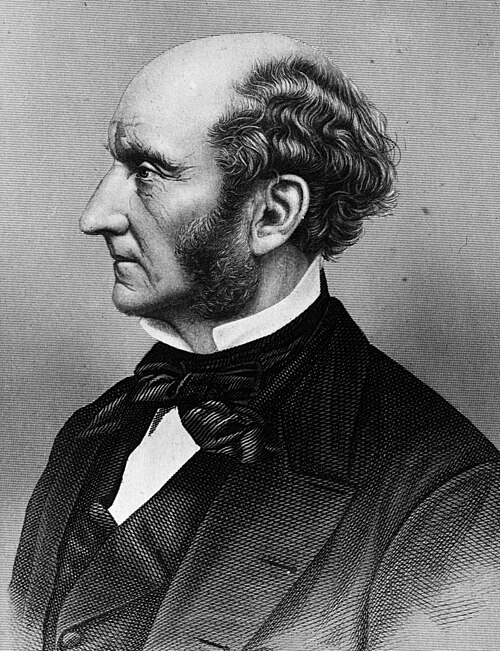

Utilitarianism is a consequentialist ethical and political philosophy that holds that the morally right action or institution is the one that maximizes overall happiness, pleasure, or well-being (often called “utility”) for the greatest number of people. Developed in the late 18th and 19th centuries by Jeremy Bentham and refined by John Stuart Mill, it evaluates everything—laws, governments, markets, and individual choices—by its net contribution to human flourishing.
Utilitarianism is a double-edged sword. On one hand, it provides a powerful consequentialist framework for arguing that free markets, private property, and voluntary exchange produce vastly more utility than coercive state institutions. On the other, its focus on collectivist aggregate outcomes can justify violations of individual rights and the initiation of force whenever doing so is claimed to increase “total happiness”—a dangerous opening for statism. Anarcho-capitalists therefore engage utilitarianism strategically while rejecting it as a foundational moral theory, preferring either anti-subjectivist or natural-rights Deontology (as in Smith Moore, or Murray Rothbard) or a stricter, rights-respecting consequentialism (as in David Friedman).
Origins and Key Thinkers#
Jeremy Bentham (1748–1832), the founder of modern utilitarianism, articulated the “greatest happiness principle” in An Introduction to the Principles of Morals and Legislation (1789). He argued that pain and pleasure are the only intrinsic values and that all actions should be judged by their tendency to promote the former or prevent the latter. Bentham was a radical reformer who advocated for legal codification, prison reform, and even animal rights—ideas that sometimes aligned with liberty but often required strong state power to implement.
John Stuart Mill (1806–1873), Bentham’s godson and intellectual heir, refined the doctrine in his short book Utilitarianism (1863) and defended individual liberty in On Liberty (1859). Mill introduced qualitative distinctions between pleasures (“higher” vs. “lower”) and the famous harm principle: the only justification for interfering with someone’s liberty is to prevent harm to others. This created a partial bridge to libertarian thought, though Mill still accepted significant state intervention for education, welfare, and economic regulation.
Later thinkers such as Henry Sidgwick and modern preference utilitarians (who replace “pleasure” with the satisfaction of informed preferences) have further developed the theory.
Core Principles#
- Act utilitarianism: Judge each individual action by its direct consequences for total utility.
- Rule utilitarianism: Follow general rules (e.g., “keep promises,” “respect property”) because following them tends to maximize utility over time, even if a particular violation might seem beneficial.
- Hedonistic vs. preference utilitarianism: Early versions focused on pleasure/pain; modern versions often focus on the fulfillment of desires or well-being more broadly.
- Impartiality: Everyone’s utility counts equally; there is no special moral weight given to one’s own interests or to existing rights.
These principles make utilitarianism highly flexible but also potentially tyrannical: if sacrificing one innocent person would produce more total happiness than letting them live, act utilitarianism appears to require the sacrifice.
Utilitarianism and Liberty: The Fundamental Tension#
Utilitarianism’s greatest strength—and its greatest danger for advocates of radical liberty—is that it judges institutions solely by outcomes, not by process or rights.
Potential support for liberty:
- Voluntary market transactions are almost always positive-sum: both parties gain, increasing total utility.
- Private property and free exchange have historically generated unprecedented wealth, innovation, and poverty reduction—clear utilitarian wins.
- Government interventions frequently fail utilitarian tests due to public-choice problems: concentrated benefits, dispersed costs, regulatory capture, and the knowledge problem (Hayek).
- David Friedman has explicitly noted that if anarcho-capitalism produces greater overall well-being than any statist alternative (as he argues it does), then a consistent utilitarian should support it. In his Substack essay “Utilitarianism and Politics,” Friedman observes that utilitarianism itself does not dictate central planning; the political conclusion depends on empirical facts about which institutions actually maximize utility.
The ancap critique:
- Rights violations: Pure act utilitarianism permits (and sometimes requires) the initiation of force against innocents whenever doing so increases aggregate happiness. This directly contradicts the non-aggression principle central to anarcho-capitalism, and is why they reject it on its face.
- Utility monsters and redistribution: A single person who derives enormous pleasure from resources could, in theory, justify taking from others. Large-scale wealth redistribution or even slavery could be “justified” if enough people benefit slightly more than the victims lose.
- The “spirit” problem (Friedman’s point): Utilitarianism treats an individual’s own good as merely one tiny input into a vast social calculus. This anathema to the libertarian ethos of self-ownership and living one’s life as one sees fit without being conscripted into someone else’s happiness project.
- Measurement problem: “Utility” is subjective and interpersonal comparisons are impossible. Governments claiming to maximize it are really imposing the preferences of bureaucrats and special interests.
- Murray Rothbard and other natural-rights anarcho-capitalists rejected utilitarianism outright, arguing that it provides no firm barrier against tyranny. Even rule utilitarianism collapses into act utilitarianism in hard cases and still subordinates rights to consequences.
The few anarcho-capitalists that subscribe to these modes of thinking often prefer rule consequentialism grounded in strong property rights and the non-aggression principle: the rules that best maximize long-run human flourishing are precisely those that prohibit aggression and protect voluntary exchange. This is the approach taken by David Friedman in The Machinery of Freedom—consequentialist in method, but fiercely protective of individual sovereignty in practice (most of the time)…
Major Works#
- Jeremy Bentham — An Introduction to the Principles of Morals and Legislation (1789)
- John Stuart Mill — Utilitarianism (1863) and On Liberty (1859)
- Modern applications appear in law-and-economics literature and in arguments for free trade, deregulation, and criminal-justice reform.
Many of these texts are in the public domain and available free online.
Anarcho-Capitalist Assessment#
Utilitarianism can be a useful rhetorical and analytical tool for demonstrating the superiority of libertarian institutions. When arguing with consequentialists, ancaps can (and should) point out that private defense agencies, competing courts, and unregulated markets deliver more security, justice, and prosperity than state monopolies—exactly what a utilitarian should want.
However, as a foundational moral theory, utilitarianism is inadequate for a consistent defense of liberty. It lacks the categorical prohibition on aggression that the non-aggression principle provides and opens the door to the very coercive “greater good” arguments that have justified every expansion of state power in history.
The most robust path to radical liberty combines:
- The economic insight that voluntary cooperation under private property maximizes human well-being (the consequentialist case), with
- The moral clarity that no one may be sacrificed against their will for anyone else’s benefit (the rights-based case).
In this synthesis—exemplified by thinkers such as David Friedman—utilitarianism can sometimes become a servant of liberty rather than its enemy.
Further reading from an anarcho-capitalist perspective
- David D. Friedman, “Utilitarianism and Politics” (Substack)
- Murray Rothbard, The Ethics of Liberty (critique of utilitarianism)
- The Machinery of Freedom (third edition) – available free as PDF at daviddfriedman.com