
Alan Futerman (full name Alan G. Futerman) is an Argentine economist, independent scholar, and PhD candidate in political economy at King’s College London. He is a prominent voice in Austro-libertarian circles, known for rigorous applications of praxeology, private property rights, and methodological individualism to both economic theory and contentious political issues. His work exemplifies the anarcho-capitalist commitment to consistent principles of self-ownership, homesteading, and the Non-Aggression Principle (NAP) properly understood—not as Pacifism, but as a framework for justice that upholds the right to defend against aggression and to retain legitimately acquired property.

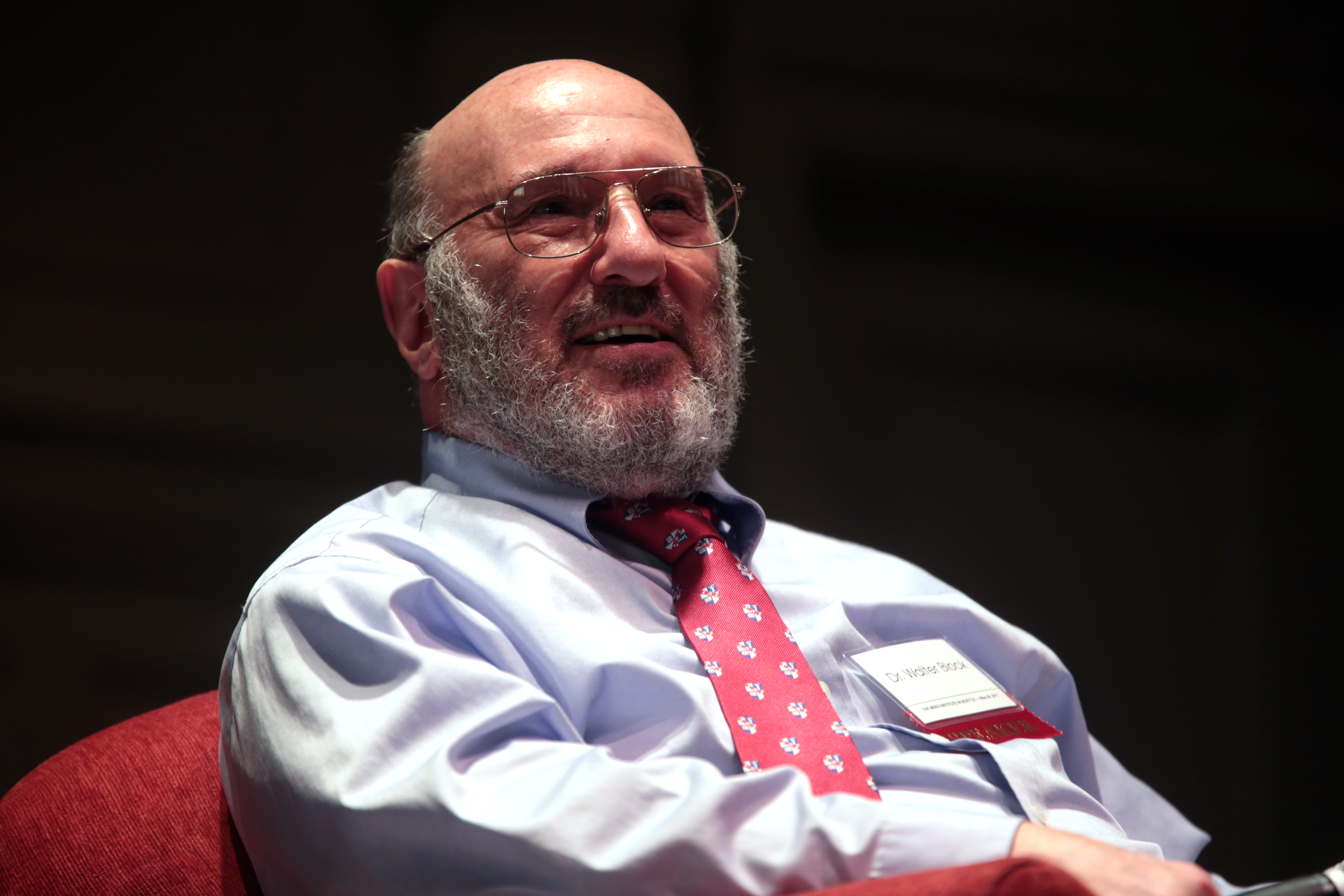
Futerman has co-authored major works with Walter Block, one of the leading anarcho-capitalist theorists, and has published extensively in peer-reviewed journals on Austrian Economics, critiques of neoclassical paradigms, and libertarian political philosophy. His most notable contribution is the 2021 book The Classical Liberal Case for Israel (co-authored with Block), which attempts to apply libertarian property theory to defend the Jewish state’s legitimacy and right to self-defense. This work, and the subsequent defenses it inspired, sparked significant controversy both among libertarians and within libertarian institutions, highlighting tensions between strict adherence to anarcho-capitalist principle and a more collectivist approximation of them applied to modern conflicts.
Early Life and Education#
Futerman hails from Rosario, Argentina. He earned a Bachelor of Arts in Economics from the Universidad del Centro Educativo Latinoamericano (UCEL) and a Master’s degree in Finance from Torcuato Di Tella University. He served as Adjunct Professor of Institutional Economics at UCEL, where he taught topics aligned with Austrian and libertarian perspectives on institutions, property, and markets.
His academic formation reflects the rich tradition of Argentine libertarian thought, influenced by the country’s history of monetary mismanagement, inflation, and state intervention—experiences that inform his critiques of fiat systems and advocacy for sound money and free markets.
Academic Career and Research#
Futerman is pursuing a PhD in political economy at King’s College London, with supervisors Professor Mark Pennington and Professor Paul Lewis. His doctoral research focuses on the epistemology and methodology of economics, particularly the problem of scientific explanation in complex social systems. He explores how economics, as a science of complex phenomena (in the Hayekian sense), can explain events only partially and probabilistically, contrasting this with positivist or historicist approaches. This work aligns with anarcho-capitalist epistemology: praxeology (the deductive study of human action, per Mises) provides aprioristic truths about purposeful behavior, value, scarcity, and exchange, while empirical history and institutions illustrate their application.
His broader research interests include:
- Philosophy of science and economics
- Austrian Business Cycle Theory and critiques of central banking
- Labor economics and minimum wage distortions
- Public goods theory reframed through libertarian lenses (e.g., security and justice as potentially marketable or privately provided)
- Critiques of statism, the war on drugs, and neoclassical consumer choice models
Futerman has published in respected outlets such as the Review of Austrian Economics, International Journal of Finance & Economics, Journal of Financial Economic Policy, Touro Law Review, and others. His op-eds have appeared in The Wall Street Journal, Financial Times, and The Jerusalem Post, bringing libertarian analysis to broader audiences. He maintains an active presence on X (formerly Twitter) as @a_futerman, where he engages on economics, Israel, and liberty.
Major Works and Contributions#
Futerman’s bibliography demonstrates a commitment to advancing anarcho-capitalist ideas through both theoretical refinement and practical application.
Books:
- The Austro-Libertarian Point of View: Essays on Austrian Economics and Libertarianism (2021, Springer; co-authored with Walter E. Block; foreword by Deirdre N. McCloskey). This collection defends and extends the Mises-Rothbard-Block tradition on topics including intentional action (praxeology), critiques of minimum wages, government growth (“ratchet effect”), and the fallacies of a priori statism. It underscores how libertarianism derives from the action axiom and rejects coercive interventions.
- The Classical Liberal Case for Israel (2021, Springer; co-authored with Walter E. Block; commentary by Benjamin Netanyahu). The landmark work applying classical liberal and libertarian principles to the Israeli-Palestinian conflict (detailed below).
- Commodities as an Asset Class: Essays on Inflation, the Paradox of Gold, and the Impact of Crypto (2022, Palgrave Macmillan; co-authored with Ivo A. Sarjanovic; foreword by John B. Taylor). This applies Austrian insights on money, inflation, and business cycles to commodity markets and emerging assets like cryptocurrencies, advocating sound money alternatives to fiat regimes.
Selected Papers and Chapters (many co-authored with Block or others):
- Critiques of neoclassical indirect taxes and consumer choice from an Austrian perspective.
- Analyses of Argentina’s monetary history (e.g., passive money systems and exchange rate controls, 1976–1981).
- “The Harmful Addiction to the War on Drugs” and minimum wage studies showing labor market distortions.
- “A Praxeological Approach to Intentional Action” (exploring Misesian foundations).
- Rejoinders and defenses on anarcho-capitalism, government growth, and terms-of-trade theories (e.g., Prebisch-Singer).
- Contributions to libertarian autobiographies and debates on public goods.
These works consistently apply anarcho-capitalist tools—homesteading theory, subjective value, time preference, and the NAP—to dismantle interventionist arguments and defend voluntary cooperation.
The Classical Liberal Case for Israel and the Resulting Controversy#
Futerman’s most prominent and impactful work is The Classical Liberal Case for Israel (2021), co-authored with Walter Block. The book attempts to construct a defense of Israel’s legitimacy and right to exist and defend itself squarely on classical liberal and libertarian foundations: private property rights, homesteading (much of the land in question was not privately owned or was legitimately purchased/acquired by Jewish settlers and the state), self-ownership, and the right of defensive retaliation against aggressors. It argues that anti-Zionism is often incompatible with consistent property theory—denying Jewish historical and legal claims while overlooking Arab rejectionism, the ethnic cleansing of Jews from Arab countries, and Hamas’s explicit genocidal charter. Israel is portrayed as the most liberal, free-market-oriented society in the Middle East, surrounded by autocracies and groups committed to its destruction.
The volume includes historical chapters (“Why Judea is Jewish,” “Zionism”), theoretical analyses of property and justice, critiques of the “Palestinian fiction factory,” and examinations of the BDS movement and “peace process.” It directly engages and rebuts Murray Rothbard’s more skeptical historical assessments of Zionism while affirming the broader libertarian commitment to justice in acquisition and transfer. Benjamin Netanyahu contributed commentary, underscoring its real-world resonance.
Following the book’s publication and especially after the October 7, 2023, Hamas attacks, Futerman and Block published further defenses, including a Wall Street Journal piece on “The Moral Duty to Destroy Hamas” and a rejoinder to Hans-Hermann Hoppe on “Israel Versus Hamas.” These arguments hold that a proper libertarian understanding of the NAP permits (and in cases of existential threat, requires) decisive defensive action, including targeting embedded aggressors even when civilian casualties occur as a tragic consequence of the enemy’s tactics—not as collective punishment, but as the aggressor’s moral responsibility.
You can view Patrick Smith and Block’s debate on these points in this interview:
Some time later, following the publication of a revealing article by Block, Smith reversed his defense of Block on this issue. You can read more about this here:
I Was Wrong on Walter Block
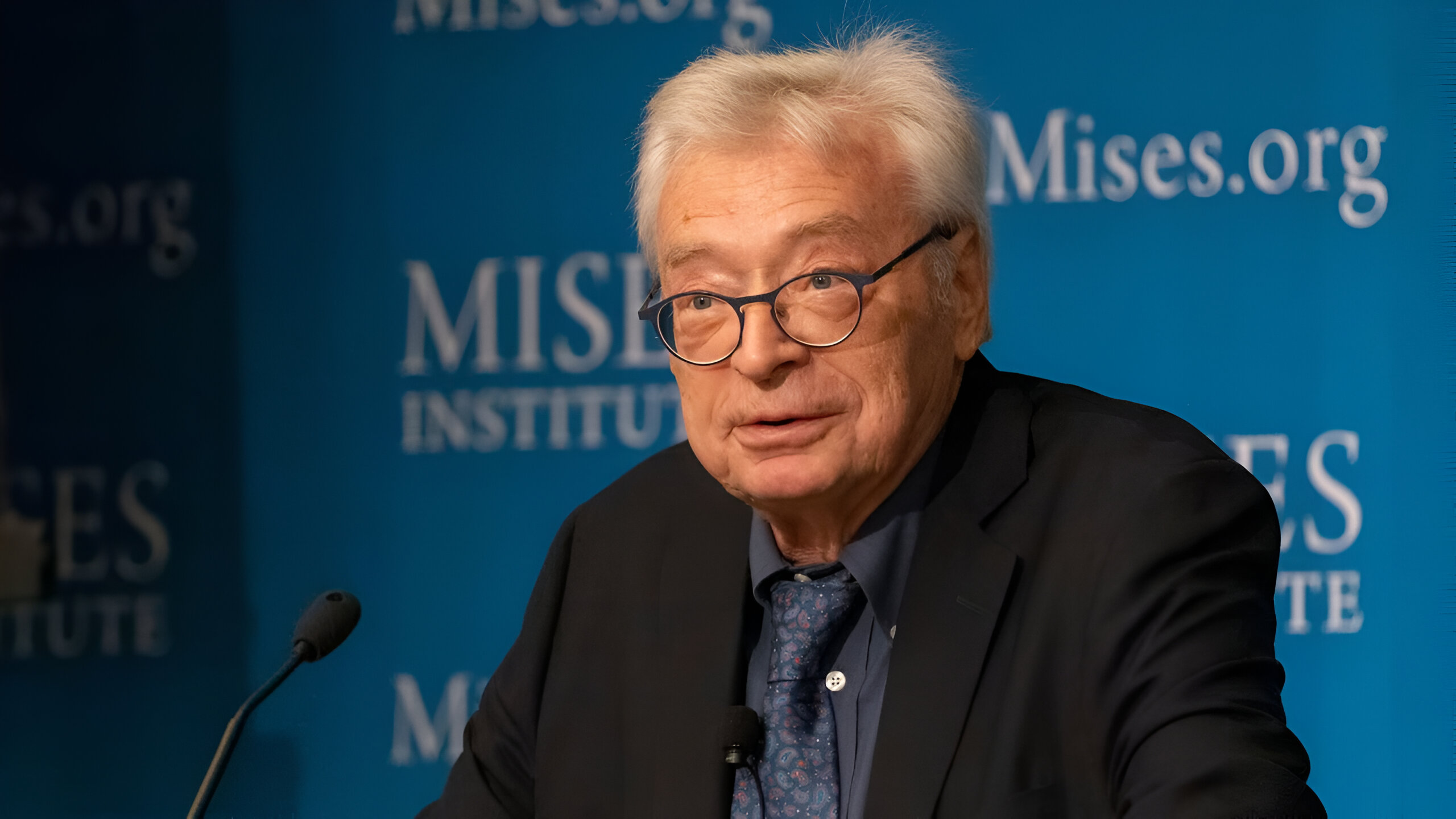
This stance provoked sharp backlash within the libertarian movement. Hoppe, in an open letter published on the Mises Institute website, publicly dissociated from Block, accusing him (and by extension the collaborative work with Futerman) of abandoning methodological individualism, embracing collectivist notions of ancestral property claims spanning millennia, and rejecting the NAP in favor of “total war” and “indiscriminate slaughter.” Hoppe claimed Rothbard would have denounced such views as “monstrous.” The Mises Institute rescinded Block’s long-held Senior Fellowship status (he had been a foundational contributor to anarcho-capitalist scholarship there), and LewRockwell.com restricted access to many of his articles. Many libertarians, particularly those emphasizing strict Rothbardian anti-interventionism or paleolibertarian cultural critiques, rebuked Block and the book as deviating from core principles or aligning too closely with “neoconservative” or pro-Israel establishment views.
Block’s ouster from the Mises Institute—despite his decades of contributions to Austrian economics and anarcho-capitalism—illustrates a healthy, though perhaps overreactive, institutional intolerance for heterodox applications within the movement, while Futerman, as a younger independent scholar less institutionally entangled, continues to advance these ideas without compromise.
Legacy and Influence#
As a once rising figure in Austro-libertarian scholarship, Alan Futerman bridges academic rigor with public engagement. His work on methodology strengthens the epistemological foundations of economics as a science of human action, while his applied writings demonstrate how libertarianism offers superior frameworks for understanding inflation, labor markets, government growth, and even international conflict. In an era of resurgent statism, identity politics, and geopolitical turmoil, Futerman’s contributions reinforce that true liberty—rooted in private property, voluntary exchange, and the right to defend one’s life and justly acquired holdings—remains the most consistent and humane path forward.
Right or wrong, he exemplifies the independent scholar in the anarcho-capitalist tradition: unaffiliated with state-funded academia yet producing high-quality research that challenges both mainstream economics and internal libertarian orthodoxies.
See Also#
- Walter Block
- Murray Rothbard
- Ludwig von Mises
- Austrian Economics
- Anarcho-Capitalism
- Non-Aggression Principle
External Links and Further Reading#
- King’s College London profile: https://www.kcl.ac.uk/people/alan-futerman
- Academia.edu profile: https://independent.academia.edu/AlanFuterman
- X/Twitter: https://x.com/a_futerman
- The Classical Liberal Case for Israel on Springer/Amazon
- The Austro-Libertarian Point of View on Springer
Articles featuring Alan Futerman
I Was Wrong on Walter Block
Related People
Hans-Hermann Hoppe
Related Concepts
Related Organizations
