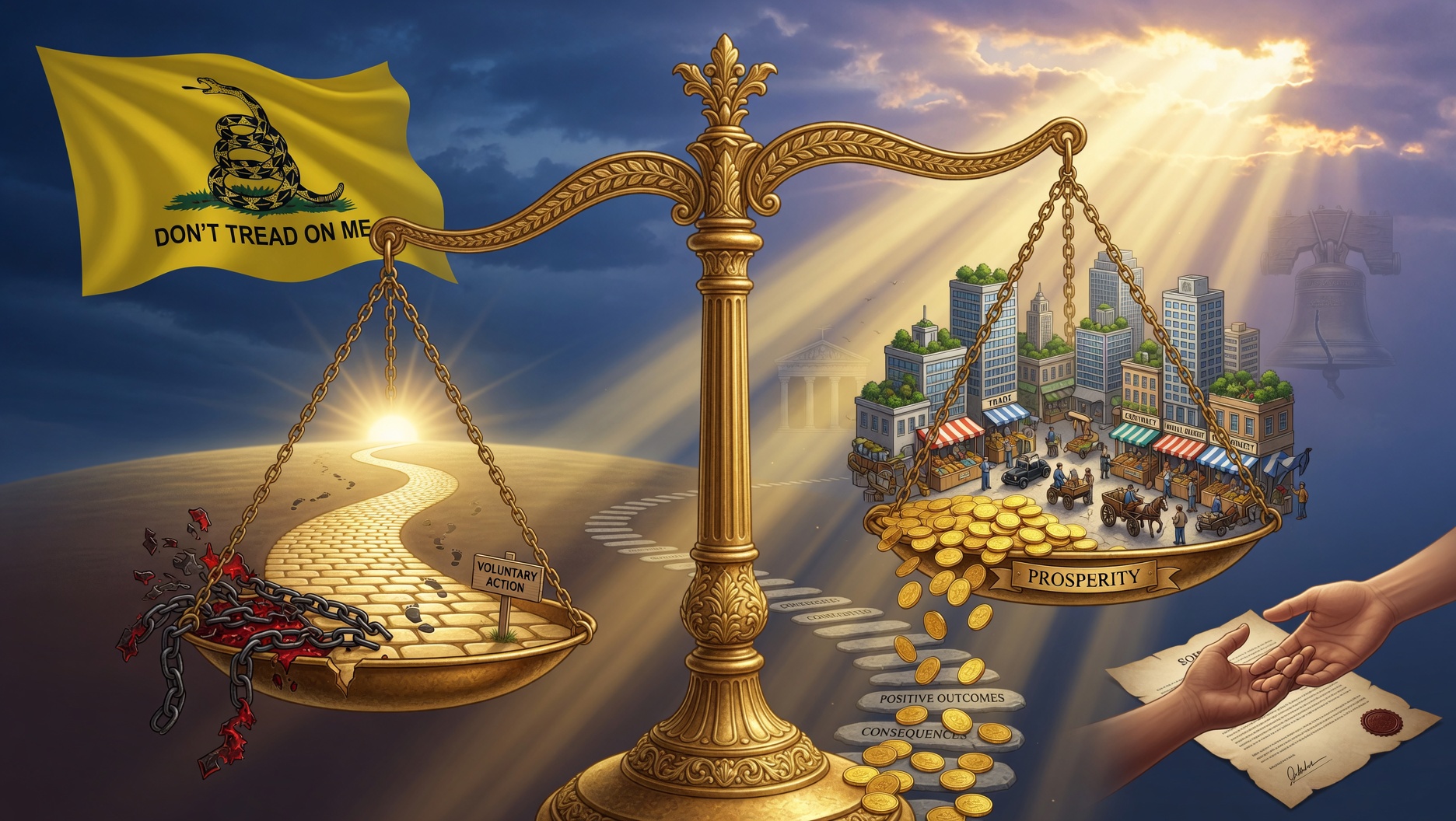
David D. Friedman (born February 12, 1945) is an American economist, physicist, legal scholar, and one of the most rigorous and influential theorists of Anarcho-Capitalism. He is best known for his seminal book The Machinery of Freedom: Guide to a Radical Capitalism (first published 1973; third edition 2014), which provides a detailed, consequentialist blueprint for a stateless society in which all goods and services—including the production and enforcement of law, defense, and dispute resolution—are supplied through voluntary market competition and private property.
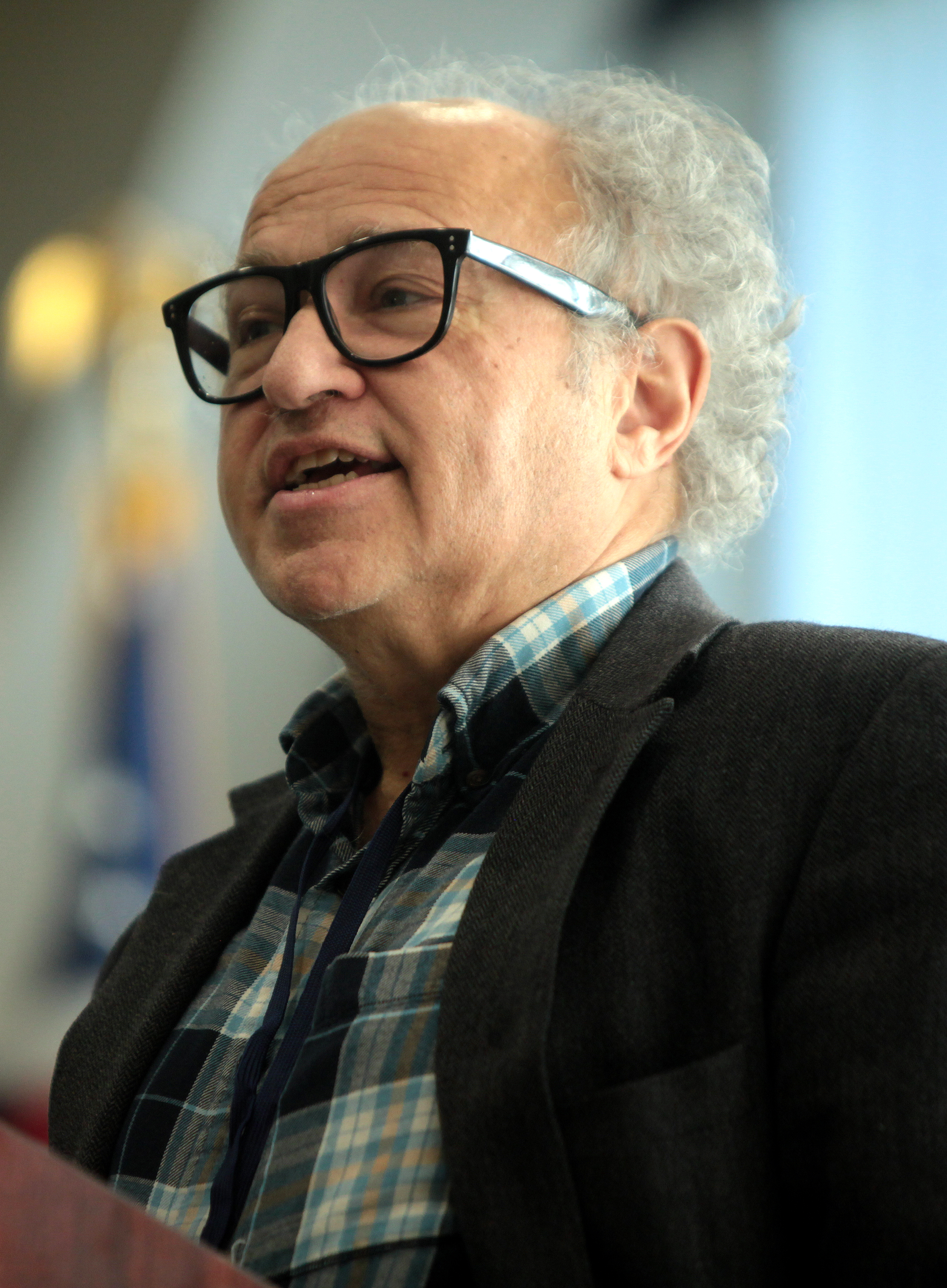
Friedman’s work stands as a cornerstone of anarcho-capitalist thought. He demonstrates, through clear economic reasoning and real-world examples, that the state is not merely inefficient but unnecessary: private institutions operating under competitive incentives can deliver superior security, justice, and order at lower cost and with greater respect for individual liberty. Unlike deontological approaches that rest on natural rights, Friedman’s defense is pragmatic and evidence-based—he shows that anarcho-capitalism simply works better.
Early Life and Education#
David Director Friedman was born in 1945 to Nobel Prize-winning economist Milton Friedman and Rose Friedman. While his father championed limited government and free markets within a constitutional framework, David pushed the logic of liberty to its consistent conclusion: the complete abolition of the state.
He earned a B.A. magna cum laude from Harvard University in 1965 (chemistry and physics), followed by an M.A. (1967) and Ph.D. (1971) in theoretical physics from the University of Chicago. Remarkably, he never took a single for-credit course in economics or law—yet he became a leading scholar in both fields through independent study and rigorous application of economic principles to human behavior.
Academic Career#
Friedman taught for over two decades at Santa Clara University School of Law (2005–2017), where he is now Professor Emeritus. His courses included Economic Analysis of Law and the seminar “Legal Systems Very Different from Ours.” He has also held positions at other universities and served as a contributing editor for Liberty magazine.
His academic output bridges physics-level precision with economic insight, always aimed at understanding how voluntary cooperation scales in complex societies.
Anarcho-Capitalist Philosophy#
Friedman’s core contribution is his consequentialist case for anarcho-capitalism. In The Machinery of Freedom, he argues that the institutions we associate with government—police, courts, legislatures, and national defense—are not inherently public goods that require monopoly provision. They are services that markets can and do provide more efficiently when competition, reputation, and profit-and-loss signals are allowed to operate.
Key elements of his vision include:
- Private defense and protection agencies competing to offer security contracts, much like insurance companies today. Customers would choose providers based on effectiveness, cost, and reliability; poor performers would lose business or face lawsuits.
- Private law and dispute resolution: Courts and arbitrators would compete for clients. Legal rules would evolve through contract and precedent rather than legislative fiat. Common-law processes, already largely private in origin, would expand.
- The “machinery of freedom”: Private property rights and voluntary exchange create incentives for peaceful cooperation even in the absence of a central enforcer. Friedman shows how mechanisms such as reputation, ostracism, bonding, and insurance solve problems traditionally cited as requiring government (e.g., externalities, public goods, monopoly).
- Incrementalism over revolution: He explicitly rejects violent overthrow, advocating instead the gradual privatization of government functions—starting with education, welfare, roads, and ultimately the legal system itself. This pragmatic path minimizes disruption while demonstrating the superiority of market solutions.
- Foreign policy: Consistent non-interventionism; states create more conflict than they prevent.
Friedman contrasts his approach with Murray Rothbard’s natural-rights anarcho-capitalism by emphasizing outcomes over axioms. He asks not “Is it a violation of rights?” but “Which system produces better results for human flourishing?” His cost-benefit framework makes anarcho-capitalism accessible and persuasive even to those who reject deontological libertarianism.
His later book Legal Systems Very Different from Ours (with co-authors) reinforces the thesis by examining historical and contemporary examples—Iceland’s medieval commonwealth, Somali customary law, Amish dispute resolution, and others—where order emerged without a centralized state monopoly.
Major Works#
- The Machinery of Freedom: Guide to a Radical Capitalism (1973, 1989, 2014) — The foundational text of modern anarcho-capitalism. Freely available as a PDF on his website; also in print, Kindle, and audiobook (read by the author).
- Law’s Order: What Economics Has to Do with Law and Why It Matters (2000) — Applies economic analysis to show how legal rules evolve toward efficiency under private incentives.
- Legal Systems Very Different from Ours (2018/2020s) — Documents real-world stateless or polycentric legal orders, proving that complex societies can function without government monopoly on force.
- Price Theory: An Intermediate Text (1986, updated editions) and Hidden Order: The Economics of Everyday Life (1996) — Accessible yet rigorous introductions to microeconomics that illustrate how markets spontaneously order human activity—the very “machinery” that makes anarcho-capitalism viable.
- Future Imperfect: Technology and Freedom in an Uncertain World (2008) — Explores how emerging technologies (encryption, surveillance, genetic engineering, etc.) will reshape liberty, often favoring decentralized, private solutions over state control.
- Novels: Harald (2006), Salamander (2011), and Brothers (2020) — Fictional explorations of societies organized around different rules and incentives.
All of Friedman’s major non-fiction works are available (many as free PDFs or drafts) on his personal website: http://www.daviddfriedman.com/.
Personal Life and Interests#
Friedman is married to Elizabeth Cook. Their son, Patri Friedman, is a prominent libertarian activist and founder of the Seasteading Institute, extending the family tradition of radical liberty projects.
An avowed atheist, Friedman is a longtime member of the Society for Creative Anachronism (SCA), where he is known as Duke Cariadoc of the Bow. He has written extensively on the philosophy and practice of historical recreation and helped shape one of the world’s largest ongoing medieval events, the Pennsic War. He is also a science-fiction enthusiast and author.
Legacy#
David D. Friedman has given anarcho-capitalism its most sophisticated economic architecture. By grounding the case for a stateless society in observable incentives, competition, and human rationality rather than moral intuition alone, he has equipped generations of liberty advocates with tools that withstand empirical scrutiny. His incrementalist, consequentialist vision continues to inspire those who seek not merely to limit the state but to replace it entirely with the voluntary institutions of a free society—the true machinery of freedom.
External resources
- Official website & free books: daviddfriedman.com
- The Machinery of Freedom (third edition PDF): available directly from the author’s site
- Wikipedia (neutral overview): en.wikipedia.org/wiki/David_D._Friedman
- Lectures and interviews: widely available on YouTube and platforms such as the Institute of Art and Ideas