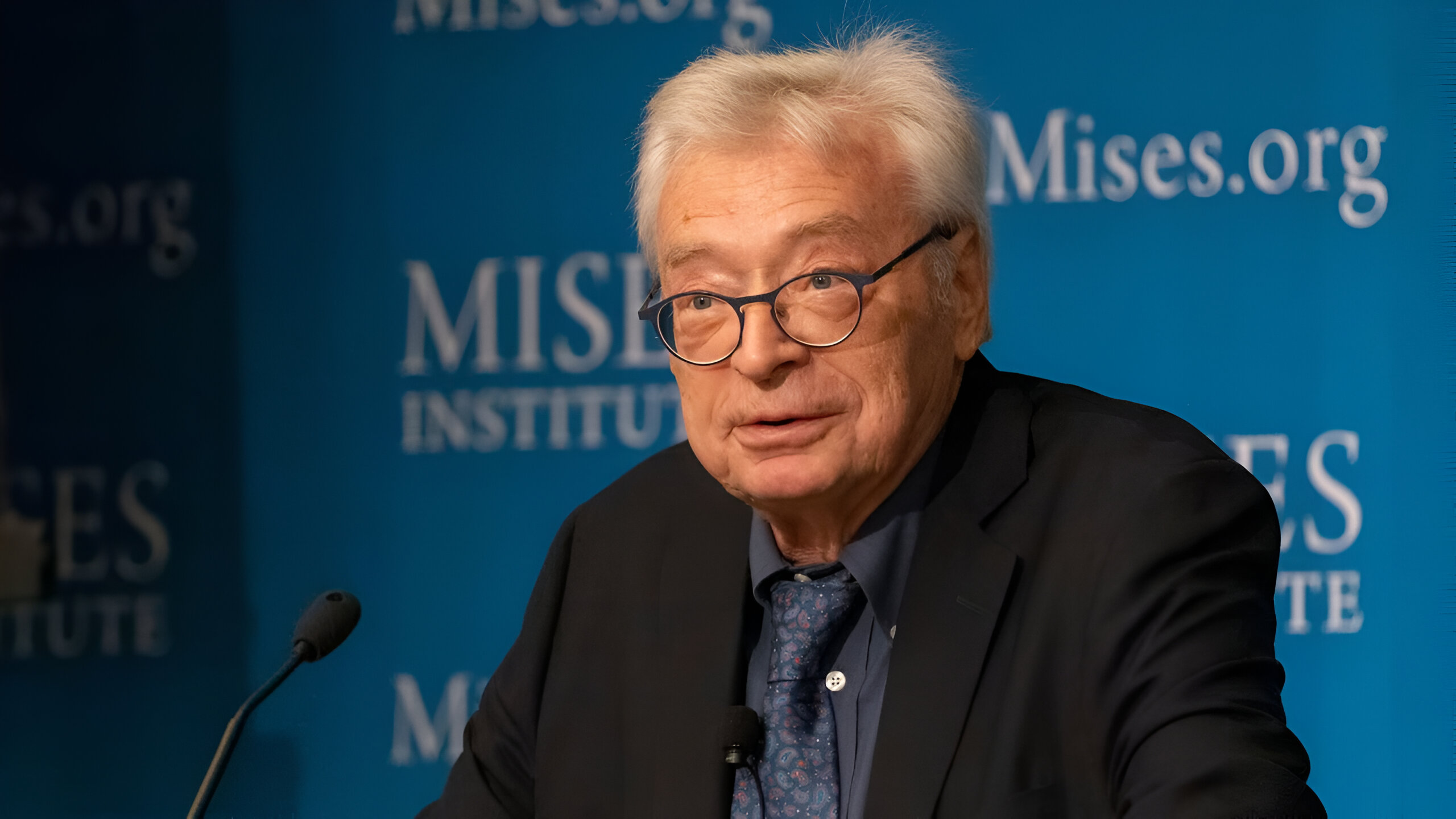
Hans-Hermann Hoppe (born 2 September 1949) is a German-American economist, philosopher, and one of the foremost thinkers in the anarcho-capitalist tradition. A leading representative of the Austrian School, Hoppe has provided some of the most rigorous and uncompromising defenses of private property, self-ownership, and a stateless social order. He is best known for developing argumentation ethics—an a priori proof that the act of rational discourse itself logically requires libertarian norms of non-aggression and homesteading—and for his masterful economic and historical demolition of democracy as a system doomed to exploitation, cultural decline, and eventual collapse. In place of the state, Hoppe advocates a natural order of private law societies: voluntary covenant communities rooted in absolute private property rights, freedom of contract, freedom of association, and the unapologetic right to discriminate and exclude. These ideas represent the consistent application of Rothbardian anarcho-capitalism to real-world incentives, human nature, and historical experience.
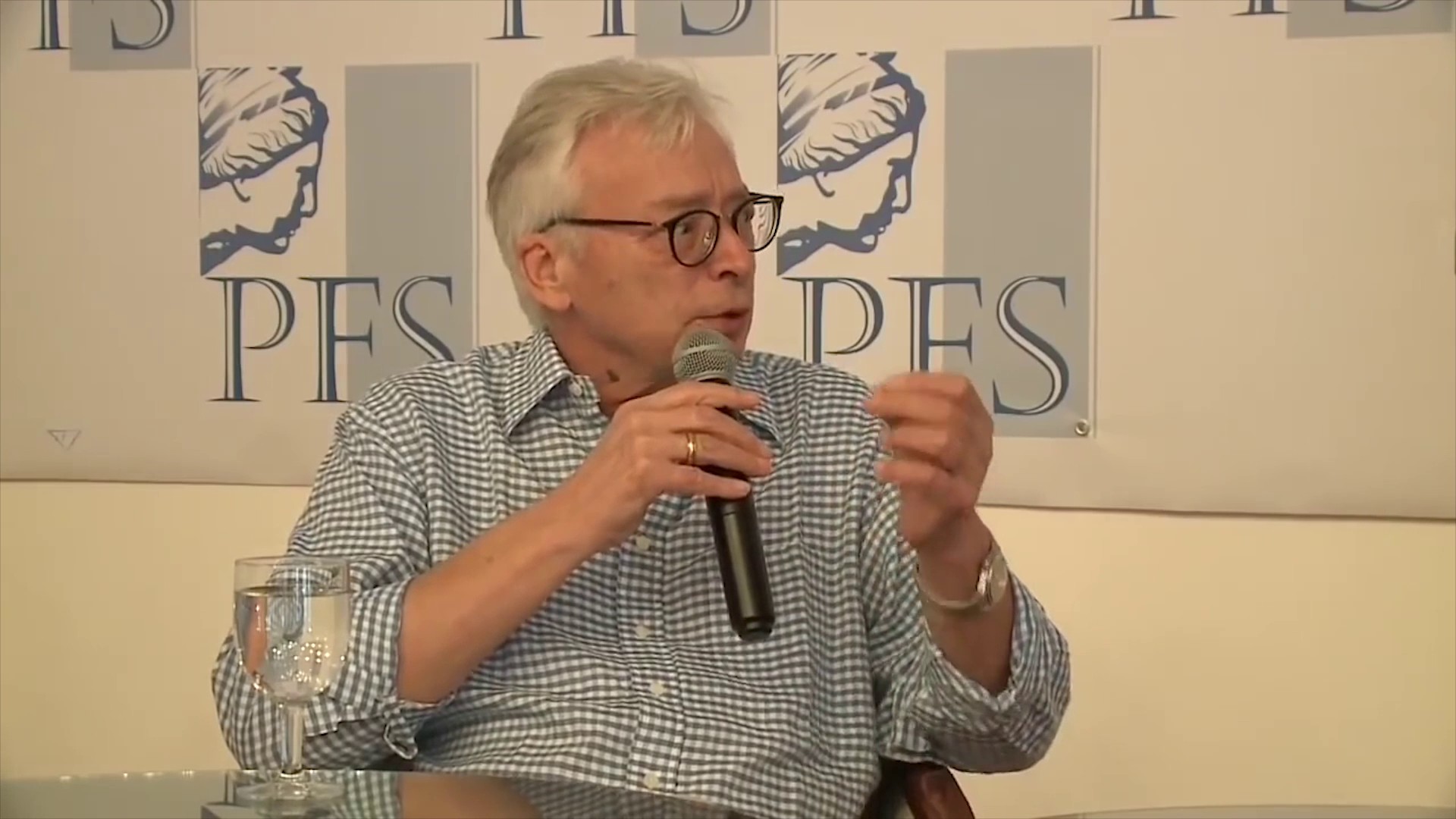
Hoppe served as Professor of Economics at the University of Nevada, Las Vegas (UNLV) from 1986 until his retirement in 2008 and is now Professor Emeritus. He is the founder and president of the Property and Freedom Society (PFS), the premier annual gathering for radical Austro-libertarian thought. A longtime leading figure and former Distinguished Senior Fellow of the Mises Institute, Hoppe remains a central intellectual force advancing consistent anarcho-capitalism and paleolibertarian realism. He and his wife, economist Dr. A. Gülçin Imre Hoppe, reside in Istanbul and host the PFS conferences at their family-run Karia Princess hotel in Bodrum, Turkey.
Early life and education#
Born in Peine, West Germany, Hoppe grew up with a direct understanding of the destructive power of socialism and expropriation. His mother’s Junker family estate had been seized by the Soviets after World War II, an experience that left a profound impression on his lifelong defense of private property. He studied philosophy, sociology, history, and economics at the Universität des Saarlandes, Goethe-Universität Frankfurt, and the University of Michigan, Ann Arbor. He earned his PhD in philosophy from Frankfurt in 1974 and his Habilitation in sociology and economics in 1981. Initially influenced by the Frankfurt School, Hoppe swiftly rejected its leftist premises after discovering the works of Ludwig von Mises and Murray Rothbard, which provided the scientific and ethical foundation for true liberty.
Career#
In 1986, Hoppe moved to the United States at Rothbard’s invitation and joined the faculty at UNLV, where he taught and wrote for more than two decades while maintaining a close intellectual partnership with Rothbard until the latter’s death in 1995. In 2006, Hoppe founded the Property and Freedom Society as a radical alternative to the increasingly compromised Mont Pelerin Society and mainstream libertarian conferences. The PFS annual meetings have become the intellectual epicenter for those committed to uncompromising private-property anarchism, cultural conservatism, free trade, peace, and opposition to the democratic state. Even after stepping back from formal academic roles, Hoppe continues to lecture, write, and host PFS events, inspiring new generations of libertarians worldwide.
Philosophical views#
At the heart of Hoppe’s contribution is argumentation ethics, which demonstrates that anyone who engages in rational argument necessarily presupposes self-ownership and the libertarian ethic; denying these principles leads to performative contradiction. This a priori proof elevates libertarianism from mere preference to irrefutable logical necessity, providing anarcho-capitalism with the strongest possible foundation.
You may view Patrick Smith and Christian Moore’s rebuttal of this argument here: Argumentation Ethics Fails - Meat and Potatoes
In Democracy: The God That Failed and related works, Hoppe delivers a devastating comparative analysis: monarchy, while far from ideal, at least treats the realm as private property and therefore exhibits longer time horizons and less reckless exploitation than democracy. Democracy, by contrast, incentivizes short-term plunder through taxation, inflation, regulation, and endless warfare. Both systems, however, are vastly inferior to the stateless natural order—a private law society of competing protective agencies, insurance companies, and voluntary covenant communities. In such a society, individuals and groups exercise full rights of discrimination and exclusion based on property titles, allowing culturally homogeneous communities to flourish while incompatible ideologies (democrats, communists, or any who reject the non-aggression principle) can be physically removed. Hoppe’s realism on immigration, time preference, and the necessity of cultural compatibility flows directly from the logic of private property: open borders under a welfare state constitute forced integration and a violation of native owners’ rights.
His thought synthesizes Austrian praxeology with a clear-eyed understanding of human biology, culture, and incentives, offering libertarians not airy utopianism but a practical roadmap for achieving liberty through secession, decentralization, and covenantal freedom of association.
Major works#
Hoppe’s writings are essential texts for serious students of anarcho-capitalism:
- A Theory of Socialism and Capitalism (1989) — his breakthrough English-language treatise contrasting the two systems through the lens of property rights.
- The Economics and Ethics of Private Property (1993; expanded 2006) — a foundational collection developing argumentation ethics and the ethics of private property.
- Democracy: The God That Failed (2001) — his most influential work, a brilliant takedown of the democratic myth and defense of monarchy, natural order, and covenant communities.
- The Great Fiction: Property, Economy, Society, and the Politics of Decline (2012; revised editions) — essays on the illusions of statism and the path to liberty.
- A Short History of Man: Progress and Decline (2015) — a sweeping account of human progress through private property and the forces that threaten it.
- From Aristocracy to Monarchy to Democracy (2014) — a concise history of moral and economic folly.
- Getting Libertarianism Right (2018) — a call to reclaim the radical Rothbardian vision.
- Economy, Society, and History (2021) — lectures synthesizing his mature thought.
Earlier German works include Kritik der kausalwissenschaftlichen Sozialforschung (1983) and Eigentum, Anarchie und Staat (1987). Most of his output is freely available through the Mises Institute and hanshoppe.com.
Controversies#
Hoppe’s unflinching application of private-property logic has inevitably drawn fire from left-libertarians, egalitarians, and statists who reject the full implications of liberty. The 2004–2005 UNLV episode—where a student complaint targeted his classroom discussion of time preference and lifestyle choices—exemplified the politically correct assault on academic freedom and economic truth. Hoppe successfully defended himself on grounds of free inquiry, turning the episode into a case study of how the state-funded academy polices dissent. Critics who label his positions “intolerant” simply fail to grasp that true tolerance in a free society means the right to exclude; forced association is the real intolerance. The Property and Freedom Society’s willingness to host diverse radical voices committed to property and against the state continues to represent the uncompromising spirit Rothbard championed.
Personal life#
Hoppe lives in Istanbul with his wife, economist Dr. A. Gülçin Imre Hoppe. The couple has four children and seven grandchildren. Their Karia Princess hotel in Bodrum, Turkey, serves as the vibrant home of the annual Property and Freedom Society conferences, embodying the private-order ideal Hoppe has long defended.