
Llewellyn Harrison “Lew” Rockwell Jr. (born July 1, 1944) is an American author, editor, political consultant, and one of the most influential living champions of anarcho-capitalism. A self-professed anarcho-capitalist, he founded and serves as chairman of the Ludwig von Mises Institute and created LewRockwell.com, a daily platform dedicated to anti-war, anti-state, and pro-market ideas in the tradition of Murray Rothbard and the Austrian school of economics.
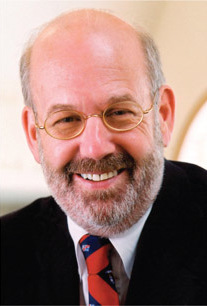
Early Life and Intellectual Formation#
Rockwell was born in Boston, Massachusetts, on July 1, 1944. He earned a Bachelor of Arts degree from Tufts University. After graduation, he worked at Arlington House Publishers, where he deepened his engagement with the works of Ludwig von Mises. He also spent time with the John Birch Society and later in fundraising and public relations at Hillsdale College.
The pivotal moment in his intellectual journey came in 1975 when he met Murray N. Rothbard. Rothbard, the towering figure of modern anarcho-capitalism, convinced Rockwell to abandon Minarchism (the belief in a minimal “night-watchman” state) and fully embrace anarchism — the view that the state is inherently illegitimate and that a purely voluntary, private-property-based social order is both possible and morally superior. This conversion shaped the rest of Rockwell’s life and work.
Career and Institutional Leadership#
In the late 1970s and early 1980s, Rockwell served as chief of staff to Congressman Ron Paul, forging a lifelong friendship and collaboration. In 1982, together with Rothbard and other libertarians, he founded the Ludwig von Mises Institute in Auburn, Alabama. As its chairman ever since, Rockwell has built the Institute into the world’s leading center for Austrian economics and Rothbardian anarcho-capitalist scholarship.
In 1999, Rockwell and fellow anarcho-capitalist Burt Blumert launched LewRockwell.com explicitly “to carry on the anti-war, anti-state, pro-market work of Murray N. Rothbard.” The site quickly became a daily hub for writers advancing the case for a stateless society grounded in natural rights, private property, and voluntary exchange.
Political Philosophy: Anarcho-Capitalism and Paleolibertarianism#
Rockwell is a consistent and unapologetic anarcho-capitalist. He holds that the state is a coercive monopoly that violates the non-aggression principle (NAP) and that all legitimate social order can and should emerge from voluntary cooperation, “private” property, and free markets. In his view — shared with Rothbard — Austrian economics provides the indispensable analytical toolkit for understanding why stateless orders outperform state-controlled ones in every domain: money, law, defense, education, and welfare.
He co-developed Paleolibertarianism with Rothbard in the 1980s and 1990s as a strategic and cultural synthesis: radical anti-statism paired with traditional Western cultural values, skepticism of mass democracy, and opposition to the managerial welfare-warfare state. While Rockwell later distanced himself from the “paleolibertarian” label (preferring simply “libertarian”), his core position remains: a free society requires not only economic liberty but also the cultural soil of personal responsibility, family, religion, and ordered liberty that makes voluntary cooperation sustainable.
His 2014 book Against the State: An Anarcho-Capitalist Manifesto distills this vision into a concise, powerful argument that the state cannot be reformed — it must be replaced by private institutions enforcing natural law through competition and reputation.
Rockwell has consistently opposed foreign interventionism, central banking, fiat money, the regulatory state, and what he calls “economic fascism.” He champions decentralization, secession, and the radical privatization of all government functions.
Most Prominent Works#
Rockwell’s authored books form a coherent body of anarcho-capitalist thought:
- Against the State: An Anarcho-Capitalist Manifesto (2014) — His clearest and most accessible statement of the case for a purely private social order.
- Speaking of Liberty (2003) — A collection of essays applying Austrian analysis and Rothbardian principles to contemporary issues.
- The Left, the Right, and the State (2008) — Demonstrates how both major political tribes expand state power and why only anarcho-capitalism offers a consistent alternative.
- Fascism vs. Capitalism (2013) — Exposes the corporate-state nexus and defends the free market as the true opposite of fascism.
- Against the Left: A Rothbardian Libertarianism (2019) — A sharp critique of left-libertarian deviations and a restatement of the Rothbardian tradition.
He has also edited or co-edited numerous volumes, including Man, Economy, and Liberty: Essays in Honor of Murray N. Rothbard (1986), The Irrepressible Rothbard (2000), and several Mises Institute readers on gold, liberty, and economics.
Legacy in the Anarcho-Capitalist Movement#
Lew Rockwell stands as one of the principal architects of the modern anarcho-capitalist revival. Through the Mises Institute he has trained thousands of scholars, students, and activists in the ideas of Mises, Rothbard, and Hoppe. Through LewRockwell.com he has provided a daily platform that keeps the flame of radical liberty burning against the encroachments of the state.
His work embodies the conviction that liberty is not a compromise — it is the complete absence of institutionalized aggression. In an age when even many self-described libertarians accommodate the state in one form or another, Rockwell has remained steadfast: the only just and workable society is one in which all relationships are voluntary, all property is private, and the state — that “gang of thieves writ large” — has been abolished.
For anyone exploring liberty from a consistent anarcho-capitalist perspective, Lew Rockwell is essential reading and an indispensable guide.
Further Resources
- LewRockwell.com (daily articles and podcast)
- Mises.org (scholarship and books)
- Against the State (available from the Mises Store and major retailers)
Related People

Related Concepts
Related Organizations
