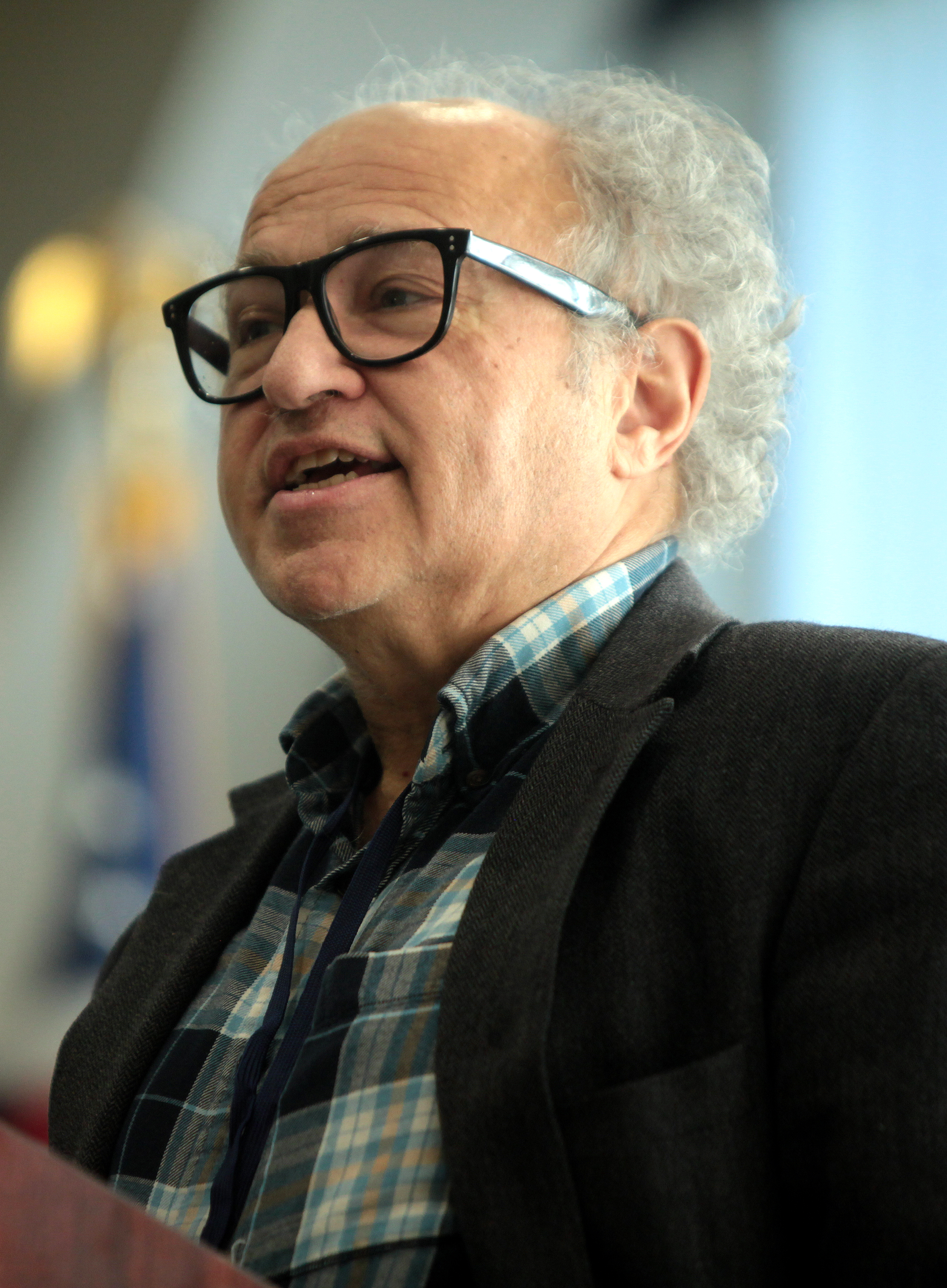
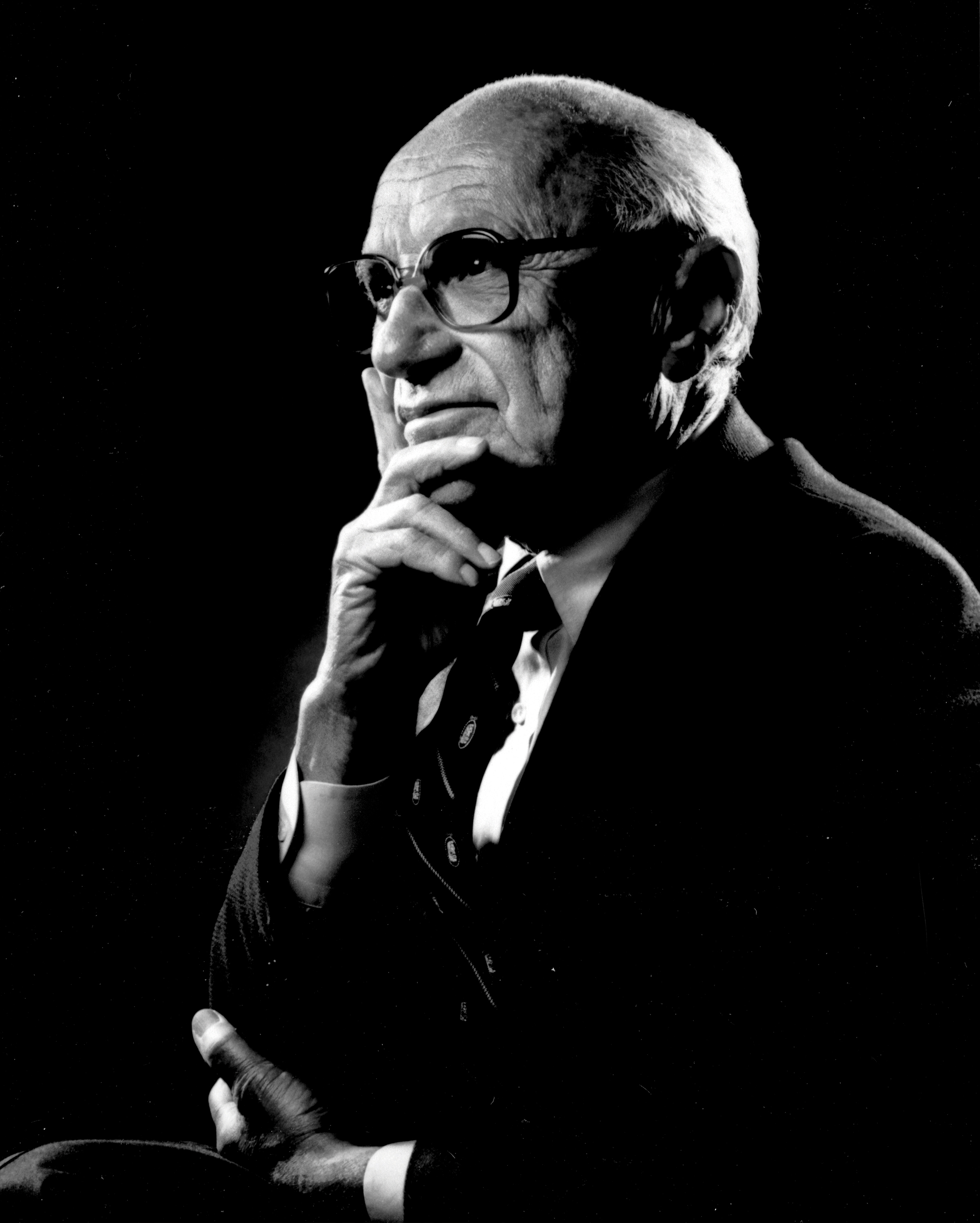
Milton Friedman (July 31, 1912 – November 16, 2006) was an American economist, statistician, and public intellectual who became one of the most influential advocates of free-market principles in the twentieth century. Friedman stands as a pivotal figure who dramatically advanced the intellectual case for economic liberty, exposed the failures of government intervention, and shifted public discourse toward individual choice and voluntary exchange—yet he ultimately fell short of the full consistency required for a truly stateless society.
His work demonstrated that markets allocate resources far more efficiently than central planners and that many supposed “market failures” were actually government-created problems. Ideas such as school vouchers, a volunteer military, floating exchange rates, and the permanent income hypothesis provided powerful tools for reducing state power. However, strict anarcho-capitalists, notably Murray Rothbard, criticized Friedman for retaining faith in a minimal state—particularly a central bank—and for proposing interventions (such as the negative income tax) that preserved coercive taxation and redistribution under a more “efficient” guise.
Early Life and Education#
Friedman was born in Brooklyn, New York, to Jewish immigrant parents from Carpathian Ruthenia (then part of Austria-Hungary, now Ukraine). His father worked in various small businesses; his mother ran a dry-goods store. The family moved to Rahway, New Jersey, when he was young. Financial instability was constant, yet the household emphasized education and self-reliance.
His father died during Friedman’s senior year of high school. Friedman excelled academically, graduating from Rahway High School in 1928 and earning a scholarship to Rutgers University, where he studied mathematics and economics (B.A., 1932). The Great Depression turned his attention to economics. He earned an M.A. from the University of Chicago in 1933 (studying under Jacob Viner, Frank Knight, and Henry Simons) and a Ph.D. from Columbia University in 1946. At Chicago he met Rose Director, whom he married in 1938; they had two children, including David Friedman, who later became a prominent anarcho-capitalist theorist and author of The Machinery of Freedom.
Academic Career and the Chicago School#
After early government work (including a regretted role in designing the WWII payroll withholding tax system while at the U.S. Treasury), Friedman joined the University of Chicago faculty in 1946. He remained there until 1976, building the Chicago School of economics into a powerhouse of free-market thought. He also held long associations with the National Bureau of Economic Research and, after retirement, the Hoover Institution at Stanford.
Friedman’s monetarism challenged Keynesian orthodoxy by arguing that inflation is “always and everywhere a monetary phenomenon” and that erratic Federal Reserve policy, not free markets, caused the Great Depression (“The Great Contraction”). His A Monetary History of the United States, 1867–1960 (1963, with Anna Schwartz) remains foundational. He proposed the “k-percent rule” for steady money-supply growth and the “helicopter drop” thought experiment to illustrate monetary effects—tools that highlighted how government monetary monopoly distorts economies.
Other contributions included the permanent income hypothesis (A Theory of the Consumption Function, 1957), the natural-rate hypothesis (undermining the Phillips curve), and price theory emphasizing individual choice over aggregate demand management. These ideas showed that voluntary market processes outperform coercive state planning.
Advocacy for Liberty and Market Solutions#
Friedman consistently argued that economic freedom is a prerequisite for political freedom. In public life he championed:
- School vouchers — Replacing government monopoly schooling with parental choice and competition.
- Negative income tax — A simpler, less bureaucratic alternative to the welfare state (though anarcho-capitalists note it still relies on coercive taxation).
- Volunteer military — Ending the draft, a major victory for individual liberty achieved in the 1970s.
- Drug legalization and opposition to occupational licensing and the post office monopoly.
- Floating exchange rates and free trade.
- Privatization and deregulation.
He advised Presidents Nixon and Reagan and influenced Margaret Thatcher. His 1980 PBS series and book Free to Choose (with Rose) brought these ideas to millions, demonstrating how government programs create dependency and how markets empower individuals.
These proposals represented enormous progress: they chipped away at state monopolies and proved that private alternatives could deliver better outcomes. Friedman helped move the Overton window dramatically toward liberty.
Major Works#
- A Theory of the Consumption Function (1957) — Introduced the permanent income hypothesis, showing households smooth consumption based on long-term expectations rather than current income. This undermined Keynesian fiscal stimulus arguments.
- Capitalism and Freedom (1962) — His most explicitly libertarian work. It linked economic and political freedom, advocated vouchers, a volunteer army, floating rates, and criticized occupational licensure and the draft. A cornerstone text for liberty advocates.
- A Monetary History of the United States (1963, with Anna Schwartz) — Empirical masterpiece blaming the Federal Reserve for deepening the Depression. It remains essential reading for understanding how central banking creates instability.
- Free to Choose (1980, with Rose Friedman) — Popularized the above ideas through television and accessible prose, reaching a broad audience with clear demonstrations of market superiority.
These works collectively provided rigorous evidence that expanding voluntary exchange and shrinking coercive authority improves human welfare.
Political Influence and Global Impact#
Friedman’s ideas shaped 1980s policy shifts in the United States, United Kingdom, Chile (economic liberalization under Pinochet, which he supported on economic grounds while criticizing the regime’s politics), and post-communist transitions. He received the Nobel Memorial Prize in Economic Sciences in 1976 “for his achievements in the fields of consumption analysis, monetary history and theory and for his demonstration of the complexity of stabilization policy,” along with the Presidential Medal of Freedom (1988).
Anarcho-Capitalist Assessment and Critique#
Anarcho-capitalists view Friedman as a giant whose empirical and rhetorical victories made the case for liberty far stronger than before. His exposure of government failure (especially monetary policy) and promotion of market alternatives (vouchers, privatization) directly advanced the cause of reducing state power and inspired later thinkers, including his own son David.
However, Friedman remained a statist. In his 1971 essay “Milton Friedman Unraveled,” Murray Rothbard argued that Friedman was not truly a free-market economist because:
- He endorsed a central bank and fiat money controlled by the state (even under rules), rather than free banking or commodity money.
- His “neighborhood effects” (externalities) doctrine justified ongoing government intervention, including tax-funded education vouchers that leave the coercive funding mechanism intact.
- The negative income tax preserved redistribution and taxation rather than abolishing them.
- Overall, Friedman made government more efficient and palatable instead of rejecting its legitimacy outright.
Rothbard concluded it was “difficult to consider him a free-market economist at all.” Friedman, in turn, dismissed such purism as dogmatic. Anarcho-capitalists acknowledge the tactical value of Friedman’s incrementalism while insisting that only the complete privatization of law, defense, courts, and money—voluntary governance through property rights and contracts—achieves genuine liberty.
In short, Friedman was an indispensable ally in the long march toward freedom, but anarcho-capitalism demands full principled consistency: abolishing the state monopoly on legitimate force entirely.
Personal Life, Death, and Enduring Legacy#
Friedman and Rose collaborated professionally for decades; their partnership exemplified voluntary cooperation. He died in San Francisco in 2006 at age 94. His intellectual legacy continues through the Friedman Foundation for Educational Choice (now EdChoice), the Hoover Institution archives, and the ongoing influence of Chicago School ideas on monetary policy and deregulation debates.
Friedman’s greatest contribution was proving—through rigorous scholarship and popular communication—that free individuals coordinating voluntarily outperform coercive hierarchies. His work remains essential reading for anyone exploring liberty, even as it highlights the need for a more consistent and radical application of market principles to all areas of life, including the provision of security and justice.