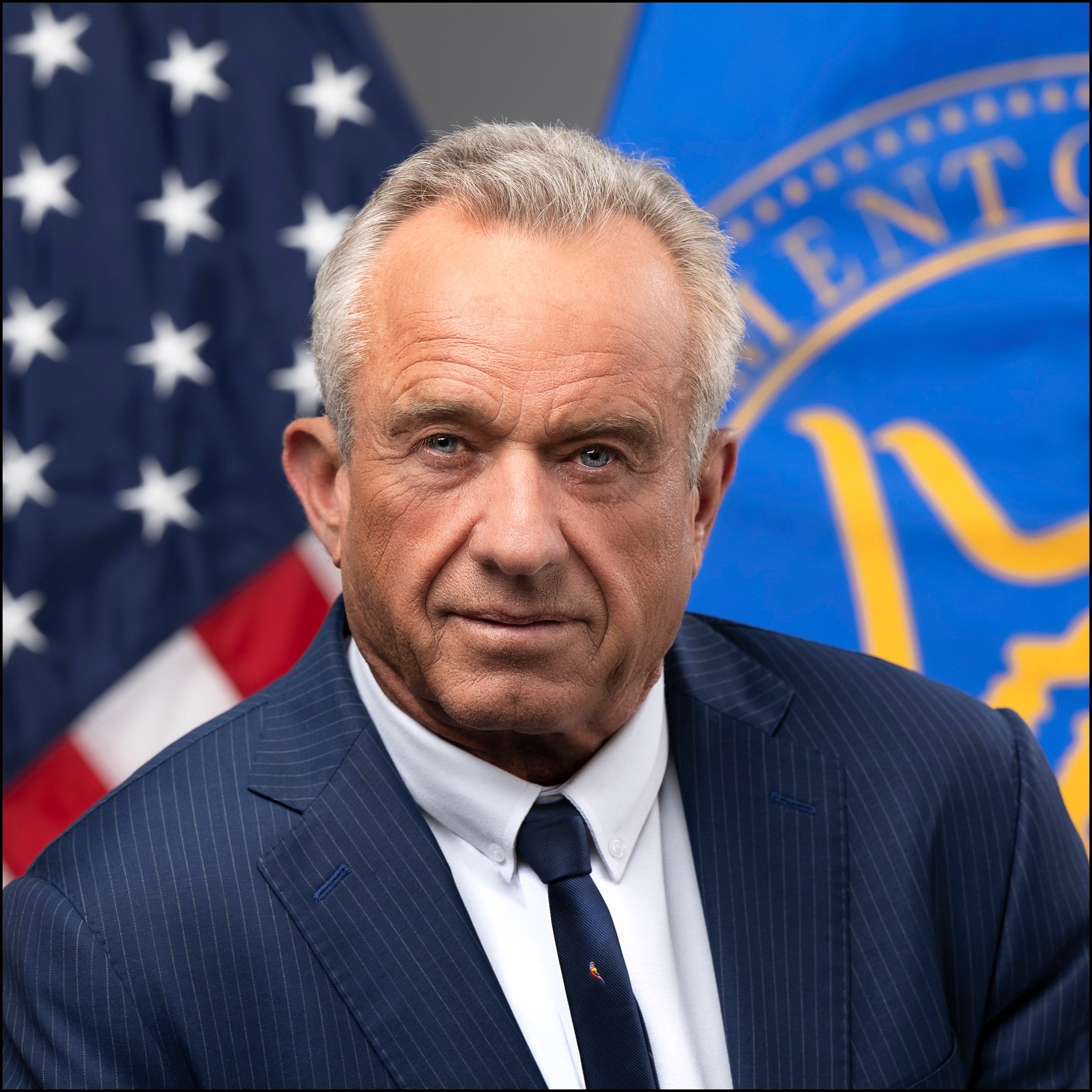
Robert F. Kennedy Jr. (born January 17, 1954) is an American environmental lawyer, author, and politician best known for his critiques of regulatory capture, corporate-government collusion in public health, and coercive mandates. Kennedy represents a partial ally in the broader struggle against the administrative state: his work often highlights the failures of centralized power and champions individual autonomy, especially in health and environmental matters. However, his participation in electoral politics and acceptance of high federal office underscore the limitations of working within the system rather than abolishing it in favor of voluntary, market-based solutions.
Early Life and Education#
Robert Francis Kennedy Jr. was born in Washington, D.C., the third of eleven children of U.S. Senator and Attorney General Robert F. Kennedy and Ethel Skakel Kennedy. He is the nephew of President John F. Kennedy. Raised amid the Kennedy family’s political legacy at Hyannis Port and Hickory Hill, he attended Harvard University (B.A. in American history and literature, 1976), the London School of Economics, the University of Virginia School of Law (J.D., 1982), and Pace University (LL.M. in environmental law, 1987).
Early personal struggles, including a 1983 heroin possession conviction (for which he received probation and treatment), preceded his pivot to environmental advocacy as a form of personal and professional redemption.
Environmental Activism and Legal Career#
Kennedy’s most enduring contribution lies in his environmental work, which aligns more closely with anarcho-capitalist principles than typical green statism. In 1985 he joined the Hudson River Fisherman’s Association (later Riverkeeper) as senior attorney, pioneering the use of common-law nuisance suits and private litigation to hold polluters accountable under property rights and tort principles—rather than relying on expansive bureaucratic regulation. He co-founded the Waterkeeper Alliance in 1999, expanding this model globally.
This approach treats environmental harm as a violation of individual and property rights enforceable through private action and courts, not top-down edicts from agencies prone to capture. His 1996 negotiation of the New York City Watershed Agreement demonstrated stakeholder consensus over coercive mandates. While he has supported some legislative reforms, his core method—litigation enforcing existing rights—echoes the anarcho-capitalist preference for decentralized, voluntary enforcement mechanisms over the state’s monopoly on force.
Prominent Works#
Kennedy’s writings have amplified skepticism of state-corporate alliances, resonating with libertarian critiques of cronyism:
- The Riverkeepers (1997, with John Cronin): Chronicles the Waterkeeper movement and serves as a practical guide to citizen-led environmental defense.
- Crimes Against Nature (2004): A New York Times bestseller exposing how political power enables corporate plunder of natural resources.
- The Real Anthony Fauci: Bill Gates, Big Pharma, and the Global War on Democracy and Public Health (2021): His most influential recent work, detailing alleged regulatory capture, suppressed treatments, and the dangers of centralized public-health authority during the COVID era. It frames government agencies as tools of pharmaceutical interests rather than protectors of liberty.
- Other notable titles include Thimerosal: Let the Science Speak (2014), American Values (2018), A Letter to Liberals (2022), and Vax-Unvax: Let the Science Speak.
These books consistently argue that informed consent and transparency are essential to human flourishing—core liberty values—while exposing how state power distorts markets and suppresses dissent.
Political Campaigns, Libertarian Pahtay Ties, and Government Role#
Kennedy launched a 2024 presidential bid as a Democrat before switching to independent status in October 2023, criticizing the “uniparty” and emphasizing health freedom, ending foreign proxy wars, and reducing regulatory overreach. He selected entrepreneur Nicole Shanahan as running mate. His campaign polled strongly among voters disillusioned with both major parties.
Notably, he engaged the Libertarian Pahtay in 2024, speaking at its national convention and flirting with its nomination as a vehicle for ballot access and anti-establishment messaging. He was eliminated early in the delegate process (Chase Oliver ultimately won the nomination), though some state affiliates explored listing him. This flirtation highlighted his appeal to those seeking alternatives to the duopoly.
On August 23, 2024, Kennedy suspended his campaign and endorsed Donald Trump. Following Trump’s victory, he was nominated and confirmed (February 13, 2025) as the 26th U.S. Secretary of Health and Human Services. In that role he has advanced the “Make America Healthy Again” (MAHA) agenda, revising vaccine recommendations, scrutinizing chronic disease drivers, and challenging institutional inertia at agencies like the CDC and FDA.
These actions expose the dangers of government monopolies on medicine and information far more effectively than abstract theory. Opposition to vaccine mandates and emphasis on bodily autonomy directly challenge state coercion. Yet true liberty demands not reform of HHS but its abolition—replacing it with private certification, market competition, and individual responsibility. Kennedy’s tenure illustrates both the value of insiders exposing rot and the ultimate futility of wielding state power to shrink the state.
Anarcho-Capitalist Assessment#
Kennedy’s career offers valuable ammunition against the Leviathan: his Riverkeeper model proves private rights enforcement can protect the environment without endless bureaucracy; his writings dismantle the myth of benevolent regulatory agencies; and his health-freedom advocacy affirms the non-aggression principle in medical decisions. His willingness to challenge Big Pharma–government symbiosis aligns with Murray Rothbard’s and Hans-Hermann Hoppe’s analyses of state-enabled crony capitalism.
Nevertheless, participation in elections and cabinet service reveals the gravitational pull of power. Anarcho-capitalists know all states as illegitimate monopolies on violence; Kennedy’s pragmatic alliances, while tactically useful, fall short of advocating the complete privatization of defense, law, and health. Still, in a world dominated by coercive institutions, his voice has helped normalize skepticism of centralized authority—advancing the intellectual groundwork for a society of voluntary contracts and private property.