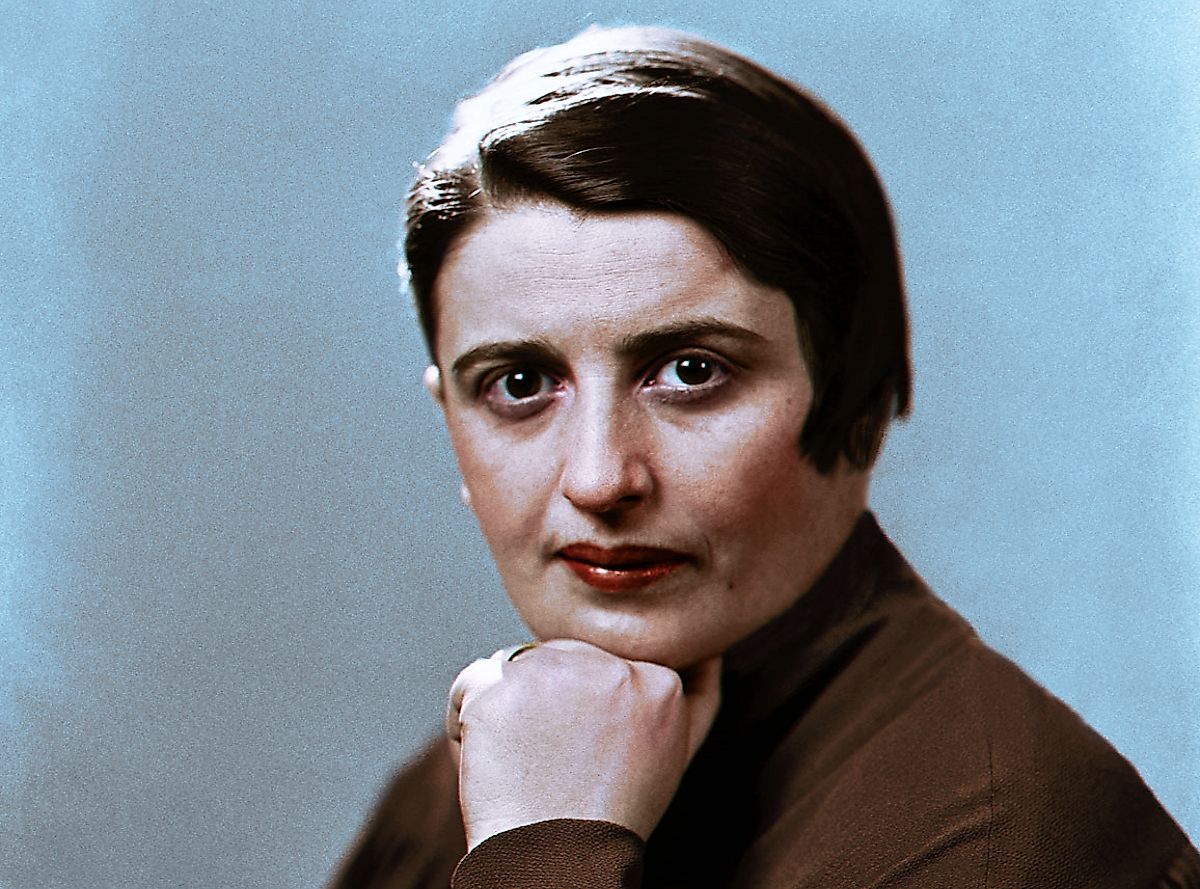
Rose Wilder Lane (December 5, 1886 – October 30, 1968) was an American writer, journalist, and one of the most incisive critics of state authority in the 20th century. Best known as the daughter of Laura Ingalls Wilder and a key figure in the Little House series, Lane forged a powerful intellectual legacy as a champion of radical individualism. She stands as a prophetic voice who exposed the coercive nature of all political authority—whether monarchical, socialist, fascist, or the creeping statism of the New Deal—and celebrated the spontaneous order that emerges when free individuals, secure in their persons and property, pursue their own ends without rulers or central planners.
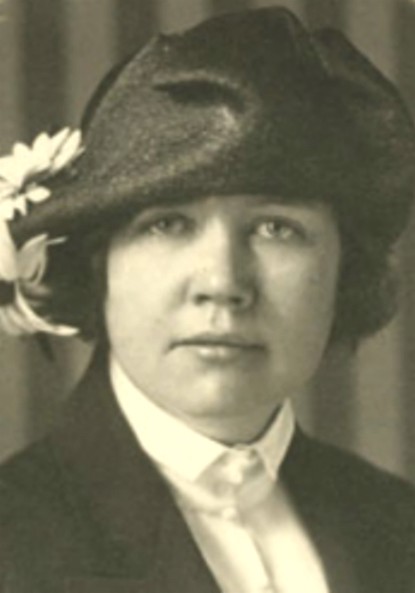
Lane’s life and work embody the anarcho-capitalist insight that human flourishing arises not from government benevolence or collective schemes but from the uncoerced exercise of individual energy, voluntary exchange, and private property rights. She rejected the notion that any “Authority” (a term she often capitalized) could legitimately direct human action, arguing instead that the American experiment represented humanity’s greatest (if incomplete) break from the age-old pattern of subjugation to the state.
Early Life#
Born Rose Wilder in a claim shanty near De Smet in Dakota Territory (now South Dakota), Lane was the only child of Laura Ingalls Wilder and Almanzo Wilder to survive infancy. The family endured crop failures, diphtheria, paralysis, debt, and constant relocation—experiences that instilled in her a visceral understanding of self-reliance amid hardship. They eventually settled on Rocky Ridge Farm near Mansfield, Missouri, in 1894.
Lane was precocious, teaching herself to read at age three and excelling in school despite financial barriers that prevented college. At 16 she left home, supporting herself as a telegrapher in Missouri, Kansas City, and California. These early years of economic independence and mobility shaped her lifelong conviction that individuals, not institutions or “society,” create prosperity.
Journalistic and Literary Career#
Lane built a remarkable career as one of the highest-paid female writers of the 1920s. She worked for the San Francisco Bulletin, contributed to Harper’s, Saturday Evening Post, and Ladies’ Home Journal, and served as a correspondent in post-World War I Europe and the Near East. She authored the first biography of Herbert Hoover (The Making of Herbert Hoover, 1920) and wrote popular novels drawing on family pioneer stories, including Let the Hurricane Roar (1932, later reissued as Young Pioneers) and the bestselling Free Land (1938).
She played an indispensable editorial role in her mother’s Little House books—transforming Laura’s manuscripts into the beloved series. These stories are not mere children’s tales but parables of voluntary homesteading, mutual aid without state welfare, skepticism toward distant government, and the dignity of productive labor on one’s own land—precursors to the libertarian frontier ethic.
Political Philosophy: The Struggle Against Authority#
Lane’s political awakening came through direct experience. Early flirtation with socialism and even communism (including a 1920s visit to Soviet Russia that shattered her illusions) gave way to fierce opposition to all forms of collectivism. By the 1930s she had become a leading voice against Franklin D. Roosevelt’s New Deal, which she saw as “creeping socialism” that infantilized citizens and destroyed the self-reliant character forged on the American frontier.
Her seminal 1936 essay “Credo” (expanded as the pamphlet Give Me Liberty) and especially The Discovery of Freedom: Man’s Struggle Against Authority (1943) form the core of her contribution. In these works she traces human history as a perennial conflict between the creative energy of free individuals and the dead hand of Authority—kings, priests, dictators, central planners, and welfare bureaucracies. America’s revolution, she argued, was unique because it rejected the European premise that individuals exist to serve the state; instead, it recognized that the state (if it must exist at all) exists only to protect individual rights.
Lane’s analysis anticipates key insights:
Spontaneous order and the futility of planning: Government attempts to control markets or “plan” the economy are not merely inefficient—they are assaults on the decentralized knowledge and voluntary cooperation that alone generate wealth. She celebrated the “free choices of all the individuals working, selling, buying and consuming” as the true planner of a prosperous society.
Property rights as the foundation of liberty: Lane explicitly linked rights to property, noting that without secure “private” property there can be no genuine rights or individual sovereignty. This aligns directly with anarcho-capitalist ethics.
The state as aggressor: Taxation, conscription, rationing, Social Security (which she called a “Ponzi scheme”), and regulatory bureaucracies were, in her view, mechanisms of coercion that erode personal responsibility and invite tyranny. She lived this philosophy in Danbury, Connecticut, refusing government rations during World War II, bartering with neighbors, and growing her own food.
Individualism over collectivism: She rejected all group-based identities—race, class, nation—as tools of manipulation by those who seek power. True equality and progress come when individuals are judged by their actions in a free market, not by state-enforced categories.
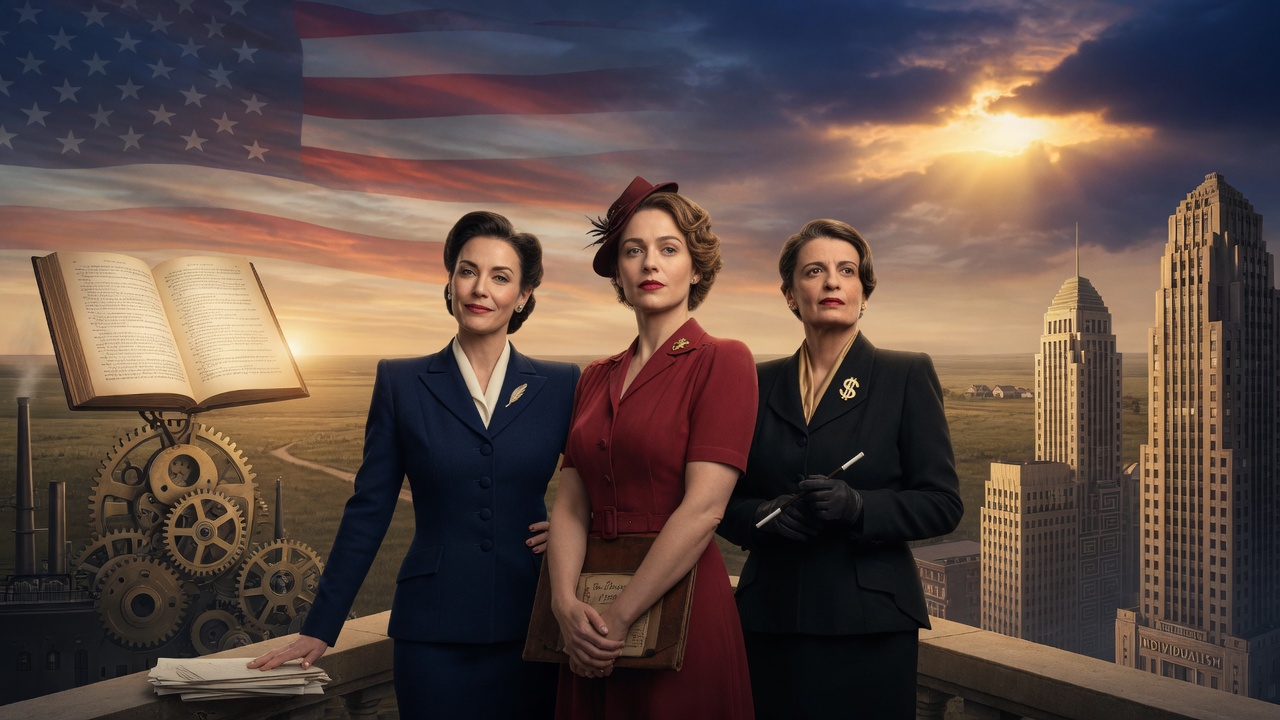
Lane’s FBI file and the government surveillance she faced for her writings underscore how threatening her ideas were to the expanding administrative state. She corresponded with and influenced figures across the emerging libertarian movement, including Ayn Rand (to whom she reportedly suggested plot elements later used in Atlas Shrugged) and Isabel Paterson. Together the three women are rightly called the “founding mothers” of modern American libertarianism.
Major Works#
- Give Me Liberty (1936, expanded from “Credo”): A personal and historical manifesto tracing Lane’s journey from socialism to uncompromising individualism.
- The Discovery of Freedom (1943): Her philosophical masterpiece. A sweeping history arguing that human progress occurs precisely when individuals escape the grip of Authority and are free to act on their own judgment. Long out of print but revered in libertarian circles (including at the Mises Institute), it remains essential reading for anyone seeking to understand the intellectual roots of opposition to the state.
- Free Land (1938) and earlier novels: Fictional explorations of homesteading that dramatize the virtues of self-reliance and the costs of government intervention.
- Journalism and columns (especially her 1942–1945 “Rose Lane Says” series in the Pittsburgh Courier): Powerful defenses of color-blind individualism and free-market opportunity.
Legacy and Influence#
Lane died in her sleep on October 30, 1968, in Danbury, Connecticut, at age 81—still planning further travels and refusing to compromise her principles. She is buried beside her parents in Mansfield, Missouri.
While Lane did not explicitly advocate the complete abolition of the state (a position later systematized by Murray Rothbard and other anarcho-capitalists), her relentless critique of Authority, her defense of property and voluntary exchange, and her vision of society as a network of free individuals rather than subjects of rulers provide foundational fuel for anarcho-capitalist thought. She understood, as few did in her era, that the New Deal and its successors represented not progress but a regression to the authoritarian patterns humanity had spent centuries escaping.
Her influence echoes in the modern libertarian and anarcho-capitalist movements: in the emphasis on homeschooling and self-reliance, in critiques of central banking and fiat money, in the celebration of crypto and private governance experiments, and in the recognition that the frontier spirit of voluntary cooperation—not state programs—built America. Roger Lea MacBride, her literary heir and the 1976 Libertarian Party presidential candidate, carried her torch into electoral politics.
Lane’s life proves that ideas have consequences. By rediscovering and popularizing the American commitment to individual liberty against all forms of coercion, she helped keep the flame of freedom alive during the darkest decades of 20th-century statism. She remains not merely a historical figure but a comrade in the ongoing struggle: the struggle of free human beings against every throne, every bureaucracy, and every claim of rightful domination over the sovereign individual.
Further Reading
- The Discovery of Freedom (available via Mises Institute and libertarian publishers)
- Give Me Liberty
- Biographies such as The Ghost of the Little House by William Holtz and works examining her alongside Rand and Paterson.