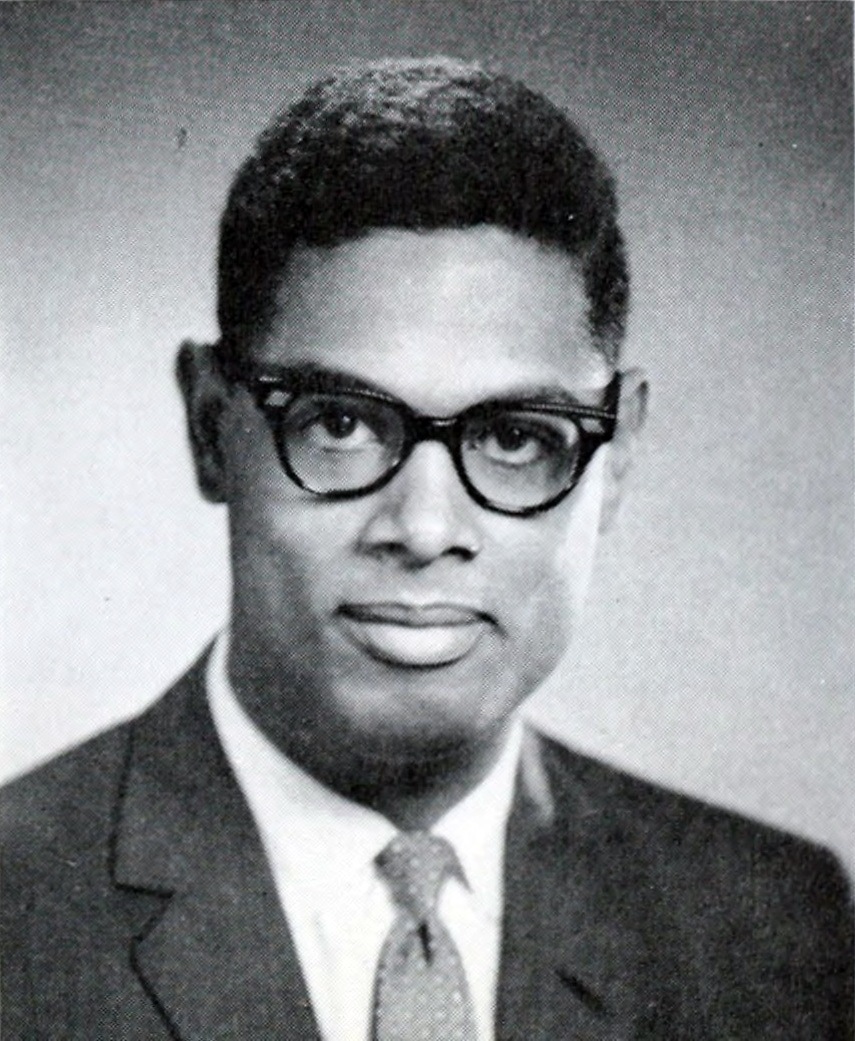
Thomas Sowell (born June 30, 1930) is an American economist, economic historian, and social theorist whose decades of empirical scholarship have powerfully illuminated the mechanisms of voluntary cooperation, the perils of centralized power, and the cultural foundations of human flourishing. Sowell’s work stands as one of the most rigorous, evidence-based demolitions of the state’s pretensions to improve society through coercion. While he has described himself as a libertarian on economic matters and a conservative on social issues—advocating a constitutionally limited government rather than its outright abolition—his analyses consistently reveal the state as an engine of unintended consequences, knowledge destruction, and elite rent-seeking that harms the very people it claims to help. His writings provide indispensable ammunition for the anarcho-capitalist case that a society of private property, free markets, and voluntary exchange can coordinate human action far more effectively and justly than any political authority.
Early Life and Formative Experiences#
Sowell was born into poverty in Gastonia, North Carolina, in 1930. His father died shortly before his birth; he was raised primarily by a great-aunt after his mother’s early death. The family lived in a wooden house without electricity or running water in Charlotte before moving to Harlem, New York City, when Sowell was nine. He attended (but did not graduate from) the elite Stuyvesant High School, dropped out at 17 due to financial pressures, and worked a series of menial jobs including machine-shop labor and telegram delivery.
Drafted in 1951, he served in the U.S. Marine Corps during the Korean War as a photographer. These early hardships instilled in him a profound respect for individual resilience and a lifelong skepticism toward claims that external “systems” or government programs determine outcomes. Sowell’s personal trajectory exemplifies the power of human agency in a world of scarce resources and imperfect institutions—precisely the conditions that markets, not states, best navigate.
Education and Intellectual Transformation#
After his discharge, Sowell completed high school via night classes, attended Howard University briefly, and transferred to Harvard, graduating magna cum laude in economics in 1958 at age 28. He earned a master’s degree from Columbia University in 1959 and a Ph.D. from the University of Chicago in 1968 under George Stigler.
Early in life Sowell was sympathetic to Marxism, but a 1960 internship with the U.S. Department of Labor studying minimum-wage effects on Puerto Rican workers shattered that worldview. He observed that government-mandated wage floors increased unemployment among the least skilled—the very population they were supposed to protect. This experience, combined with the intellectual environment of Chicago economics (Milton Friedman, George Stigler, and the broader tradition of price theory and public-choice insights), turned Sowell into a relentless critic of state intervention.
Sowell’s conversion illustrates the Misesian insight that economic calculation and knowledge problems doom central planning and interventionism. His subsequent career became a sustained empirical demonstration that the state’s “solutions” reliably produce the opposite of their stated intentions.
Academic and Professional Career#
Sowell held teaching positions at Cornell, Rutgers, Brandeis, Amherst, Howard, and UCLA before leaving academia in 1980 for the Hoover Institution at Stanford, where he remains a senior fellow. He has authored more than 30 books and hundreds of columns, consistently prioritizing data over narrative. He declined high-level government appointments under both Ford and Reagan administrations, preferring intellectual independence.
From the anarcho-capitalist perspective, Sowell’s refusal to join the state apparatus—despite opportunities—embodies the principled rejection of legitimizing coercive institutions. His long tenure at the independent Hoover Institution allowed him to produce work untainted by political patronage.
Major Works#
Sowell’s bibliography is vast; the following stand out for their clarity, empirical depth, and direct relevance to libertarian / anarcho-capitalist thought:
- Basic Economics (2000, multiple editions) — A lucid, non-technical exposition of how prices, profits, and losses coordinate dispersed knowledge and incentivize production without central direction. Essential reading for understanding why stateless markets can function.
- Knowledge and Decisions (1980) — Deepens Hayek’s “knowledge problem,” showing that decision-making authority must remain with those who possess local, tacit information. Centralized power inevitably destroys this knowledge.
- A Conflict of Visions (1987) — Contrasts the “constrained vision” (human nature is flawed; institutions emerge spontaneously) with the “unconstrained vision” (elites can redesign society). Anarcho-capitalists operate squarely within the constrained tradition.
- The Vision of the Anointed (1995) — A devastating critique of intellectuals and policymakers who substitute their own moral self-congratulation for evidence, leading to policies that harm the intended beneficiaries. The book reads as a catalog of state failure.
- Black Rednecks and White Liberals (2005) — Documents that many contemporary social problems in Black American communities trace to cultural patterns imported from the antebellum South rather than “systemic racism.” Government programs, Sowell argues, have often retarded the cultural evolution that produced earlier Black progress.
- Discrimination and Disparities (2018, revised 2019) — Demonstrates statistically that group outcome differences are rarely proof of discrimination and are frequently the result of choices, culture, and human capital. This undercuts the moral and empirical case for state-enforced “equity.”
- Intellectuals and Society (2009) — Examines how intellectuals, insulated from market feedback, promote ideas that expand state power at the expense of liberty and prosperity.
Other notable titles include Economic Facts and Fallacies, The Quest for Cosmic Justice, and Wealth, Poverty and Politics.
Ideas and Contributions from an Anarcho-Capitalist Perspective#
Sowell’s core themes align powerfully with anarcho-capitalist principles even if he stops short of advocating the complete elimination of the state:
The Knowledge Problem and Spontaneous Order
No central authority—whether a planning board or a regulatory agency—can aggregate the dispersed, tacit knowledge possessed by millions of individuals. Prices and voluntary exchange perform this coordination function far better than any political process. Sowell’s work extends Hayek and Mises directly into applied policy analysis.
Unintended Consequences and the State as Problem, Not Solution
From minimum wages to rent control, affirmative action to welfare programs, Sowell repeatedly shows that interventions create new problems while failing to solve the old ones. The welfare state, he argues, often functions as an inefficient middleman that extracts resources from productive people and redistributes them in ways that foster dependency. This is confirmation that the state’s monopoly on force is inherently counterproductive.
The “Vision of the Anointed” vs. Liberty
Sowell identifies a recurring pattern: self-anointed intellectuals and politicians claim superior moral insight and demand coercive power to impose their vision. This unconstrained mindset justifies ever-expanding state authority—from speech codes to economic controls—and is antithetical to the non-aggression principle and voluntaryism at the heart of anarcho-capitalism. His famous observation captures the danger perfectly: “What is ominous is the ease with which some people go from saying that they don’t like something to saying that the government should forbid it. When you go down that road, don’t expect freedom to survive very long.”
Culture, Not Coercion
Sowell consistently attributes group disparities to cultural patterns, human capital, and individual choices rather than systemic oppression requiring state remediation. This emphasis on voluntary cultural evolution and personal responsibility resonates with anarcho-capitalist views that reject collective guilt or forced redistribution as solutions to social problems.
Empirical Demolition of “Social Justice”
His international studies of affirmative action and preferential policies reveal consistent patterns of mismatch, resentment, and elite capture—precisely the outcomes anarcho-capitalists predict when political power is used to engineer outcomes instead of protecting rights.
While Sowell has expressed disagreement with certain libertarian positions (e.g., on national defense), his body of work supplies the factual and analytical foundation for arguing that even a “limited” state tends to grow, capture resources, and undermine the very liberty it claims to protect. In this sense, he functions as an indispensable bridge thinker: his constrained vision and relentless empiricism point toward the logical endpoint of a society without rulers.
Legacy#
Thomas Sowell has received the National Humanities Medal (2002) and remains one of the most cited and influential public intellectuals of the late 20th and early 21st centuries. For those exploring liberty through an anarcho-capitalist lens, his writings offer not utopian blueprints but hard empirical evidence that voluntary cooperation outperforms coercion, that culture and incentives matter more than political rhetoric, and that the greatest threats to human progress come from those who would rule rather than trade.
His work continues to inspire new generations seeking to understand why free markets—and the private property rights and non-aggression they rest upon—remain humanity’s best hope for peace and prosperity.
Further Reading
- tsowell.com (official site with columns and updates)
- Maverick: A Biography of Thomas Sowell by Jason L. Riley (2021)
- Full bibliography available on academic and publisher sites.